
Personal Budgeting from the Ground Up
New to managing your money? This comprehensive introduction walks you through every core concept of budgeting in plain, accessible language.
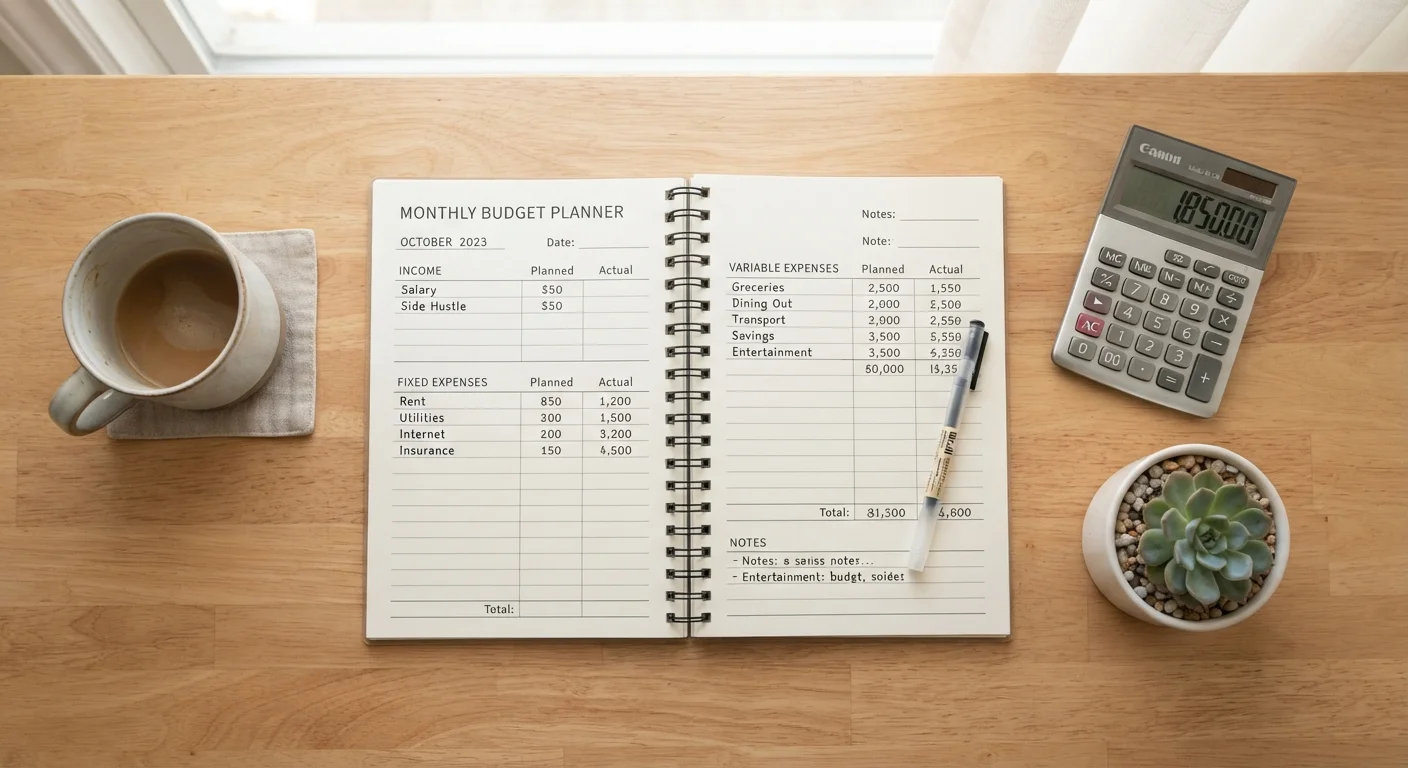
Photo: CoralScripts.com | Explore, Discover, Engage editorial
—— In This Article
Key Takeaways
- A budget is simply a plan for how you intend to use your money each month.
- Understanding the difference between fixed and variable expenses is a critical first step.
- Several budgeting frameworks exist - the right one depends on your lifestyle and goals.
- Irregular and overlooked expenses are among the most common reasons budgets fail.
- Budgeting is a recurring habit, not a one-time task - expect to refine it over time.
What a Budget Actually Is (and Isn't)
A budget is a forward-looking plan that tells your money where to go - before it goes there. That's the whole concept. It is not a punishment, a restriction on enjoyment, or a sign of financial distress. It's a decision-making tool, and it works for people across every income level.
Many people avoid budgeting because they believe it requires sacrifice or signals a problem. Several of these assumptions are worth examining - most turn out to be misconceptions that stand between people and genuine financial clarity.
At its core, a budget has two inputs: what comes in (income) and what goes out (expenses). The goal is to make those figures intentional rather than accidental. A well-constructed budget doesn't eliminate spending - it makes spending deliberate.
Net income
The amount of money you actually receive after taxes and deductions are taken out - the figure you should use as your budget's starting point.
Fixed expense
A recurring cost that stays the same each month, such as rent or a loan payment, making it easy to plan around.
Variable expense
A cost that changes from month to month depending on your choices or circumstances, such as groceries, gas, or dining out.
Emergency fund
A dedicated pool of savings set aside specifically for unexpected expenses, designed to protect your budget from being disrupted by unplanned events.
Zero-based budgeting
A budgeting method where every dollar of income is assigned to a specific purpose - spending, saving, or debt - so that nothing is left unaccounted for.
Discretionary spending
Money spent on non-essential items - things you want but don't strictly need - that you have the most flexibility to adjust.
Mapping Your Income and Expenses
Before you can allocate money, you need an honest picture of your current financial reality. Start by identifying your net income - the amount deposited into your account after taxes and any payroll deductions. If your income varies month to month, use a conservative average based on recent pay periods.
Next, list your expenses in two categories:
- Fixed expenses - costs that stay the same each month, such as rent, loan payments, or insurance premiums.
- Variable expenses - costs that fluctuate, such as groceries, utilities, transportation, and dining out.
A third, often overlooked category is irregular expenses - annual subscriptions, vehicle maintenance, gifts, and seasonal costs. These are predictable in the aggregate even when their exact timing is uncertain. Many common budget failures trace back to these forgotten categories.
Review at least two to three months of bank and credit card statements to build an accurate expense baseline. Guessing tends to significantly underestimate spending in categories like food and entertainment.
Use Real Data, Not Estimates
Pull actual bank and credit card statements when building your expense baseline - don't rely on memory or rough guesses. Most people underestimate their spending in at least two or three categories, particularly dining, subscriptions, and personal care. Even one month of real transaction data produces a far more accurate starting point than the best-intentioned estimate.
Choosing a Budgeting Framework
Once you know your numbers, you need a structure for managing them. Several frameworks have proven useful across a wide range of financial situations:
- 50/30/20
- Divide after-tax income into approximately 50% for needs, 30% for wants, and 20% for savings and debt repayment. This is a flexible starting point, not a fixed prescription - adjust proportions based on your actual obligations and goals.
- Zero-based budgeting
- Assign every dollar a job so that income minus all allocations equals zero. This method demands more discipline but provides granular control over spending.
- Pay-yourself-first
- Automatically direct a set amount to savings or investment accounts before spending anything else. This approach prioritizes long-term financial health and removes reliance on willpower. It pairs well with strategies described in building durable saving habits.
- Envelope method
- Allocate cash (or digital equivalents) into category-specific pools at the start of each month. When a category's allocation is spent, no more goes to that category until the next cycle.
No single framework is universally superior. Choose the one that fits your temperament and daily routines.
Putting Your Budget Into Practice
A budget on paper only creates value when it's actively used. The implementation phase involves three ongoing actions: tracking, comparing, and adjusting.
Tracking means recording transactions as they happen - or reviewing them at regular intervals (daily, weekly, or monthly). The more closely you track, the fewer surprises appear at month's end.
Comparing means measuring actual spending against your plan at the end of each cycle. Discrepancies aren't failures - they're information. A structured monthly audit process helps identify patterns and refine allocations over time.
Adjusting means updating your budget to reflect reality. If a category is consistently over or under, the allocation needs revision - not more willpower. Life changes (a raise, a new expense, a financial goal achieved) also require revisiting the plan.
As you move beyond the basics, consider how your budget connects to broader financial goals - saving and investing for the future becomes significantly easier once a reliable budget is in place.
Budgeting Tools Are a Personal Choice
Dedicated apps, spreadsheets, and paper notebooks all produce results - what matters is consistency of use, not the sophistication of the tool. If a complex app causes friction or anxiety, a simpler format will serve you better. The best system is the one you'll actually stick with month after month.
Common Stumbling Blocks and How to Navigate Them
Even well-intentioned budgets encounter friction. Understanding the most common obstacles in advance makes them easier to handle when they arise.
- Irregular income: If earnings vary, build your monthly plan around a floor figure - your lowest reliable income - and treat any surplus as discretionary or directed to savings.
- Unexpected expenses: An emergency fund - even a modest one - buffers your budget from being derailed by car repairs, medical costs, or other unplanned events. Starting small is more important than starting large.
- Budget fatigue: Rigidly restricting every category can lead to abandonment. Building in a small discretionary allowance for personal spending reduces the likelihood of burnout.
- Shared finances: Managing money with a partner introduces added complexity around values, priorities, and spending habits. Joint budgeting requires deliberate communication that solo budgeters don't face.
Budgeting is ultimately a skill that improves with practice. The habits that distinguish consistent budgeters from occasional ones develop over months, not days. Consistency matters far more than perfection.
This article is for general informational and educational purposes only. It does not constitute personalized financial, tax, or investment advice. Consult a qualified financial professional for guidance tailored to your individual circumstances.
Frequently Asked Questions

Money Matters Editorial Team
Money Matters Editorial Team is the collective byline for our editorial team and contributor network. Articles published under this byline or an editorial pen name are researched, written, and reviewed according to our editorial standards for clarity, consistency, and independence before publication.
View author profile