
Chronic Stress and the Body: A Guide to What Prolonged Tension Does Over Time
From inflammation to cardiovascular strain, chronic stress leaves measurable physical marks. This guide explains the mechanisms and what to be aware of.
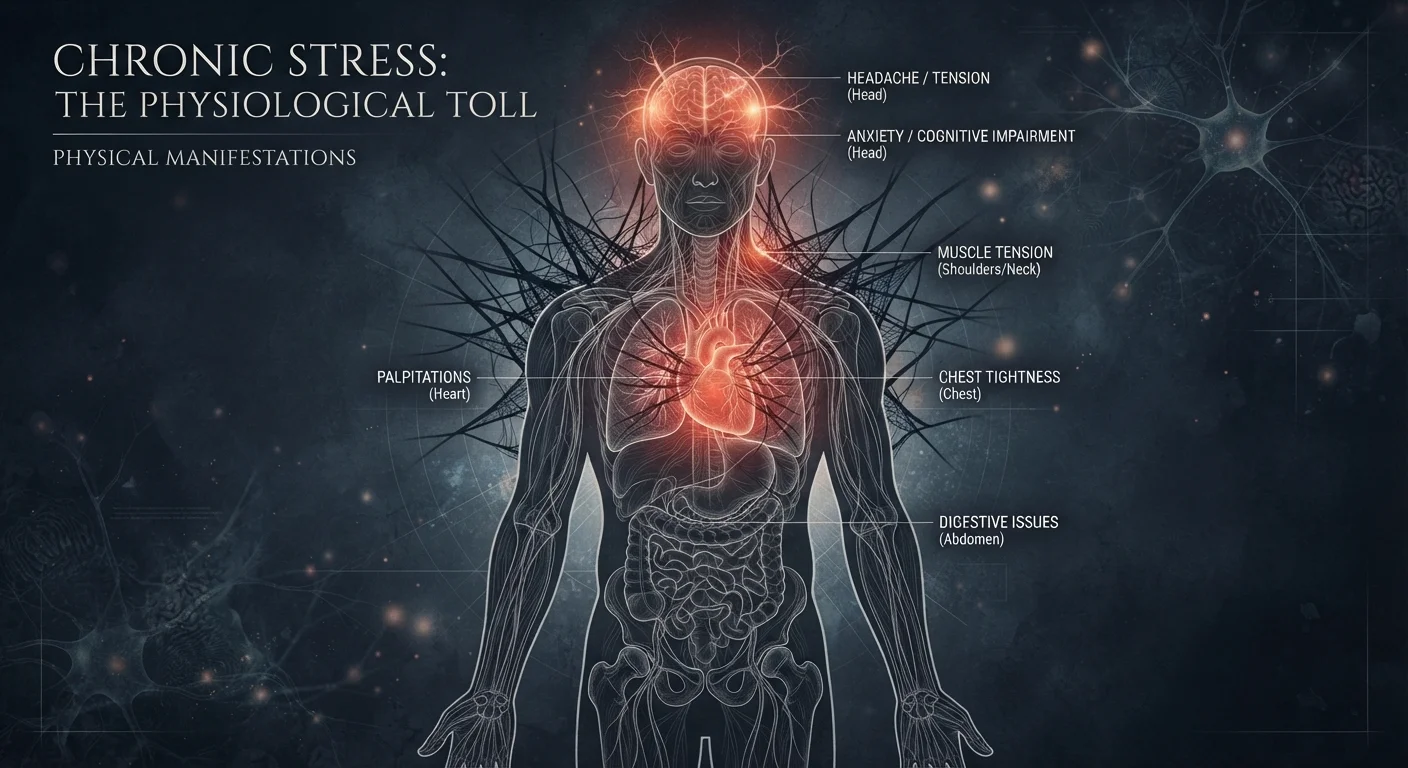
Photo: CoralScripts.com | Explore, Discover, Engage editorial
—— In This Article
Key Takeaways
- Chronic stress is physiologically distinct from acute stress and produces compounding biological damage over time.
- Sustained cortisol elevation disrupts sleep, metabolism, immune function, and cardiovascular health.
- Inflammation is a key mechanism linking prolonged stress to multiple organ systems and disease risk.
- The brain's structure and function can be measurably altered by long-term stress exposure.
- Early recognition of physical stress signals and professional support are central to managing its effects.
What Chronic Stress Actually Is
Stress is the body's natural response to perceived threat - a cascade of hormonal and neurological signals that prime you for action. In the short term, this response is adaptive and even life-saving. Chronic stress is fundamentally different: it occurs when the stress response is activated repeatedly or never fully deactivates, leaving the body in a prolonged state of physiological alert.
Researchers use the concept of allostatic load - the cumulative wear on biological systems from sustained stress exposure - to explain why chronic stress causes harm even in the absence of a single dramatic event. Small, persistent stressors compound. Understanding this framework is essential; for a plain-language breakdown of terms like allostatic load that appear throughout wellness discussions, see our holistic health glossary.
Common sources of chronic stress include financial insecurity, caregiver demands, workplace pressure, chronic illness, social isolation, and systemic disadvantage. Because these stressors are often invisible or socially normalized, the physical toll they impose frequently goes unrecognized until symptoms become significant.
Distinguish Acute from Chronic Stress
Not every stressful experience becomes chronic. Acute stress - a deadline, a conflict, a difficult conversation - typically resolves and allows the body to return to baseline. It becomes a health concern when activation is near-continuous or recovery is repeatedly interrupted. Keeping this distinction in mind helps in honestly assessing your own stress load.
The HPA Axis and Cortisol Overload
The body's primary stress-regulation pathway is the hypothalamic-pituitary-adrenal (HPA) axis. When the brain perceives a threat, the hypothalamus signals the pituitary gland, which in turn signals the adrenal glands to release cortisol. Cortisol mobilizes glucose, suppresses non-essential functions, and sharpens alertness - all appropriate in the short term.
Under chronic stress, cortisol levels remain persistently elevated. This has downstream consequences across virtually every organ system. Chronically high cortisol contributes to:
- Disrupted sleep architecture, particularly reduced restorative slow-wave and REM sleep
- Metabolic dysregulation, including increased appetite for calorie-dense foods and preferential fat storage around the abdomen
- Suppressed immune surveillance, reducing the body's capacity to detect and respond to pathogens and abnormal cells
- Impaired tissue repair, as cortisol slows collagen synthesis and wound healing
Over time, the HPA axis may also become dysregulated - producing either chronically elevated or blunted cortisol responses, both of which are associated with poor health outcomes. This bidirectional dysregulation underscores why stress is not simply a mental experience but a whole-body physiological state.
77%
Adults reporting physical stress symptoms
According to surveys conducted by the American Psychological Association, a substantial majority of U.S. adults report experiencing physical symptoms they associate with stress.
2-3×
Increased cardiovascular risk under chronic stress
Research published in cardiology literature suggests chronic psychological stress may multiply cardiovascular event risk by a factor of two to three compared to low-stress populations.
30%
Reduction in immune response efficacy
Meta-analyses of psychoneuroimmunology research indicate chronic stress can reduce markers of immune competence by roughly 30% in some study populations.
Cardiovascular and Immune Consequences
The cardiovascular system is among the most extensively studied targets of chronic stress. Sustained sympathetic nervous system activation raises resting heart rate and blood pressure, accelerates arterial stiffening, and promotes platelet aggregation - factors that collectively elevate risk for hypertension, coronary artery disease, and cardiac events over time.
Inflammation is the shared mechanism connecting stress to many of these outcomes. Chronic stress promotes pro-inflammatory signaling through pathways involving cytokines - chemical messengers that regulate immune responses. When this system is persistently active, low-grade systemic inflammation can damage blood vessel walls, contribute to atherosclerosis, and create conditions that link disparate health conditions in ways that may appear unrelated on the surface. Our explainer on how inflammation connects seemingly unrelated health conditions explores this in depth.
Immune function follows a counterintuitive pattern: short-term stress can temporarily enhance certain immune responses, while chronic stress suppresses immune competence. This helps explain why people under sustained pressure are more susceptible to common infections and may experience slower recovery from illness or injury.
Chronic Stress Is a Modifiable Health Risk
Healthcare and public health research consistently classify chronic psychological stress as a significant, modifiable risk factor for cardiovascular disease, immune dysfunction, and mental health conditions. This means it warrants the same serious attention as diet, physical activity, or sleep - not dismissal as a non-medical concern. Discussing stress with a primary care provider or mental health professional is medically appropriate and encouraged.
The Brain Under Prolonged Stress
Neuroimaging research has shown that chronic stress produces measurable structural changes in the brain. The hippocampus, a region central to memory and emotional regulation, is particularly vulnerable: sustained cortisol exposure is associated with reduced hippocampal volume in some studies. The prefrontal cortex, which governs executive function and impulse control, shows diminished activity under chronic stress, while the amygdala - the brain's threat-detection center - becomes more reactive.
These changes have practical consequences. Chronically stressed individuals frequently report difficulty concentrating, impaired decision-making, heightened emotional reactivity, and disrupted memory consolidation. Over time, these neurological effects can contribute to or exacerbate conditions including anxiety disorders and depression.
The relationship between mind and body here is not metaphorical - it is mechanistic. For a science-grounded exploration of how mental and physical health continuously influence one another, see our article on what science says about the mind-body connection. Chronic stress also amplifies pain sensitivity, creating overlap with conditions explored in our overview of chronic pain and nervous system changes.
Track physical symptoms alongside mood, not separately. Headaches, jaw tension, and GI changes logged over two to four weeks often reveal stress patterns that are invisible in the moment.
Stress-related physical symptoms are frequently dismissed or attributed to unrelated causes; longitudinal self-monitoring helps clinicians and patients identify causal patterns more accurately.
When working to reduce chronic stress, prioritize sleep quality as a first target - even modest improvements in sleep duration and regularity can help normalize cortisol rhythms faster than many other interventions.
Sleep is the primary window for cortisol clearance and HPA axis restoration; disrupted sleep creates a feedback loop that maintains elevated stress physiology regardless of other efforts.
Recognizing Warning Signs and Seeking Support
Because chronic stress accumulates gradually, many people adapt to its presence without recognizing the physical warning signs. Common physical signals include persistent fatigue that sleep does not resolve, frequent headaches or muscle tension, gastrointestinal disturbances, unexplained changes in weight, and increased susceptibility to illness. These are not vague complaints - they reflect measurable biological processes.
Acknowledging stress as a genuine health concern, rather than a personal failing, is the first step toward addressing it. Evidence-supported approaches include mind-body practices such as mindfulness-based stress reduction (MBSR), regular physical activity, adequate sleep, and social connection - all of which have demonstrated effects on HPA axis regulation and inflammatory markers in clinical research. However, the appropriate strategy depends heavily on an individual's circumstances, existing conditions, and preferences.
Stress Symptoms Can Mask Other Conditions
Many physical symptoms associated with chronic stress - fatigue, chest tightness, gastrointestinal changes, headaches - can also indicate serious medical conditions unrelated to stress. Do not assume stress is the sole explanation for persistent physical symptoms. A healthcare provider can help rule out other causes and recommend appropriate evaluation.
This article is general health information and is not a substitute for individualized medical evaluation. If you are experiencing persistent physical or psychological symptoms that may be stress-related, consulting a qualified healthcare professional is the appropriate next step.
This article is for informational and educational purposes only and does not constitute medical advice, diagnosis, or treatment. Always consult a qualified healthcare professional regarding personal health concerns or before making changes to any wellness practice.

Health & Wellness Editorial Team
Health & Wellness Editorial Team is the collective byline for our editorial team and contributor network. Articles published under this byline or an editorial pen name are researched, written, and reviewed according to our editorial standards for clarity, consistency, and independence before publication.
View author profile