
Synthetic vs. Conventional Motor Oil: What the Difference Means for Your Engine
Synthetic and conventional oils differ in more than price. Learn how each is made, how they perform, and which conditions favour one over the other.
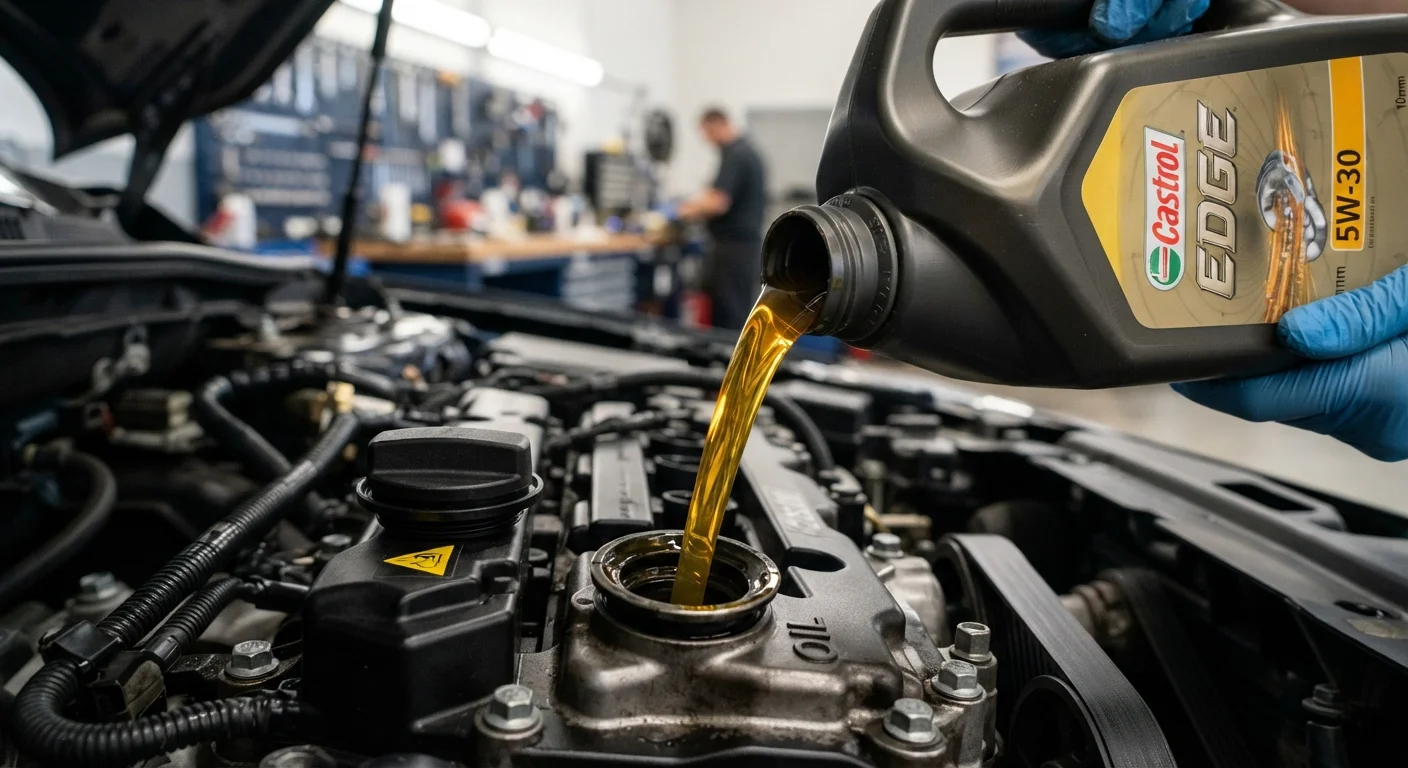
Photo: CoralScripts.com | Explore, Discover, Engage editorial
—— In This Article
Key Takeaways
- Synthetic oil is chemically engineered for uniform molecule size; conventional oil is refined directly from crude petroleum.
- Synthetics generally outperform conventional oil in extreme heat, deep cold, and high-stress engine environments.
- Conventional oil typically requires more frequent changes - often every 3,000-5,000 miles versus 7,500-15,000 for many synthetics.
- Your owner's manual, not marketing claims, should determine which oil type and viscosity grade your engine requires.
- Switching from conventional to synthetic mid-life is generally safe, but consult your manual and a qualified mechanic for high-mileage engines.
How Each Oil Is Made
The core difference between synthetic and conventional motor oil begins at the molecular level. Conventional oil is refined from crude petroleum - a process that removes impurities and undesirable compounds but leaves behind a blend of hydrocarbon molecules of varying shapes and sizes. That molecular inconsistency affects how the oil behaves under pressure and heat.
Synthetic oil is built rather than refined. Chemists engineer base oil molecules - typically polyalphaolefins (PAOs) or esters - to a uniform size and shape, then blend in an additive package calibrated for specific performance targets. The result is a lubricant with more predictable, consistent properties across a wider range of operating conditions.
There's also a middle category worth noting: synthetic blend oil mixes a conventional base stock with a proportion of synthetic base oil. It offers some performance advantages over full conventional at a lower cost than full synthetic - a common choice for light trucks and SUVs operating under moderate towing loads.
Performance Differences That Actually Matter
For most drivers, the practical performance gap shows up in three areas: thermal stability, cold-start behavior, and oxidation resistance.
| Criterion | Synthetic Oil | Conventional Oil |
|---|---|---|
| Base stock origin | Chemically engineered molecules | Refined from crude petroleum |
| Thermal stability | Higher - resists breakdown under heat | Lower - shears faster at high temps |
| Cold-start flow | Better low-temp fluidity | Thickens more at low temperatures |
| Typical change interval | 7,500-15,000 miles (varies) | 3,000-7,500 miles (varies) |
| Cost per quart | Higher upfront cost | Lower upfront cost |
| Deposit/sludge resistance | Strong oxidation resistance | More prone to sludge over time |
| Suited for turbocharged engines | Yes - widely recommended | Generally not recommended |
Thermal stability: As engine temperature climbs - particularly under towing, stop-and-go driving, or forced induction - conventional oil's irregular molecules begin to shear and break down faster. Synthetic oil holds its viscosity grade more reliably under sustained heat, maintaining the protective film between metal surfaces.
Cold-start lubrication: At low temperatures, oil thickens and flows slowly. During the first few seconds of startup, moving parts run with minimal lubrication - a period responsible for a disproportionate share of long-term engine wear. Synthetics remain more fluid in cold conditions, reaching critical components faster. This matters most in climates where temperatures regularly drop below 20°F.
Oxidation and deposit resistance: Conventional oil oxidizes more readily, forming sludge and varnish deposits on engine internals over time. Synthetics resist oxidation longer, which is one reason they can support extended drain intervals. Skipping changes entirely, however, negates this advantage - no oil lasts indefinitely.
Change Intervals and Cost in Context
Conventional oil is typically changed every 3,000-5,000 miles under normal driving conditions, though many modern vehicles and oil quality standards have pushed that ceiling toward 5,000-7,500 miles even for conventional. Full synthetic products are often rated for 7,500-15,000 miles depending on the manufacturer's specification, the engine design, and driving conditions.
~75%
US motor oil market share held by synthetic and synthetic blend
Industry trade data indicates full synthetic and synthetic blend products now account for the majority of US passenger vehicle oil sold, reflecting a significant shift from conventional over the past two decades.
Up to 15,000 mi
Maximum drain interval for some full synthetic formulations
Some vehicle manufacturers and oil producers specify extended drain intervals of up to 15,000 miles for full synthetic under ideal conditions - always verify against your owner's manual.
The higher upfront cost of synthetic - often two to four times the price per quart - is partially offset by fewer required changes per year. Whether that arithmetic favors synthetic depends on your annual mileage, your vehicle's specifications, and local labor costs if you rely on a shop. What doesn't change: the most affordable oil strategy is always following the interval in your owner's manual, not stretching it. Several persistent myths around the 3,000-mile rule deserve scrutiny - modern engines and modern oils have largely made that interval obsolete for most drivers.
What Your Owner's Manual Actually Says
Manufacturer specifications - not oil brand marketing - are the authoritative source for oil type and viscosity grade. Many engines produced since the mid-2000s specify full synthetic, and using conventional oil in those engines can leave them under-protected at the tolerances they were designed around. Some warranty terms explicitly require a specified oil type.
Viscosity grade (e.g., 5W-30 or 0W-20) matters independently of whether the oil is synthetic or conventional. A synthetic oil in the wrong viscosity grade is not a suitable substitute for the correct conventional specification, and vice versa. If your manual calls for 0W-20 full synthetic, that's the specification to follow.
For high-mileage vehicles - generally above 75,000 miles - some formulations marketed specifically for aged engines include seal conditioners and slightly modified additive packages. These can help reduce minor seepage in engines with worn seals, but a qualified mechanic is the right resource for diagnosing whether a formulation change is appropriate for your specific vehicle. See also: how different powertrain types affect lubrication demands.
Switching Oil Types Mid-Life
A common concern is whether switching from conventional to synthetic on a higher-mileage engine will cause problems. In most cases, the switch is safe - modern synthetics are compatible with engine seals used in conventional-oil engines. However, if an older engine has relied on the slightly thicker film of conventional oil to mask worn seals, the change could reveal pre-existing seepage rather than cause it. When in doubt, have a qualified mechanic evaluate the engine's condition before changing oil type on a high-mileage vehicle.

Cars & Driving Editorial Team
Cars & Driving Editorial Team is the collective byline for our editorial team and contributor network. Articles published under this byline or an editorial pen name are researched, written, and reviewed according to our editorial standards for clarity, consistency, and independence before publication.
View author profile