
Brake Pads, Rotors, and Fluid: How the Braking System Works Together
A clear explanation of the relationship between brake pads, rotors, callipers, and fluid — and what happens when any one component is neglected.
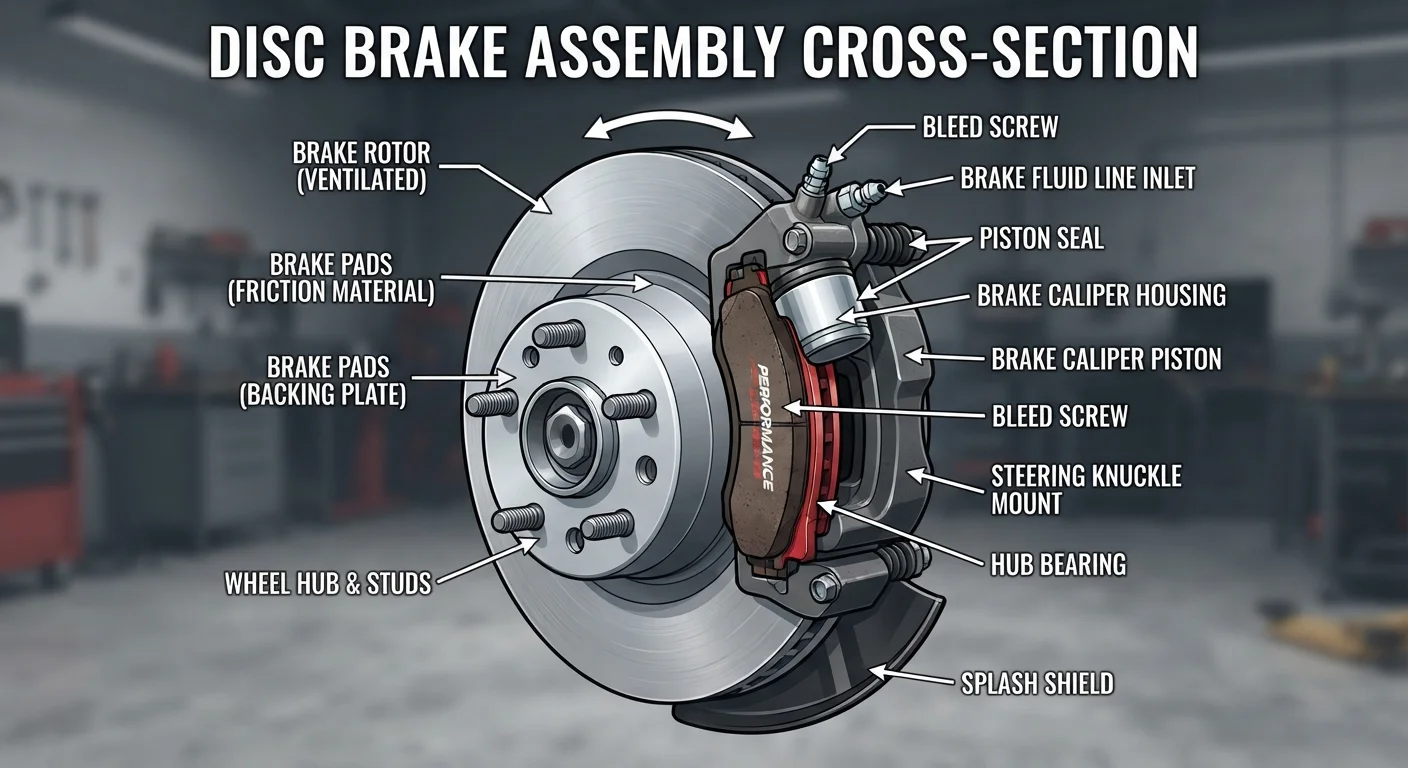
Photo: CoralScripts.com | Explore, Discover, Engage editorial
—— In This Article
Key Takeaways
- Brake fluid is the hydraulic medium that transfers pedal force to the calipers - contaminated fluid reduces this efficiency.
- Rotors dissipate the heat generated by friction; warped or scored rotors compromise both stopping power and pad wear.
- Brake pads are the consumable friction material that wears down over time and must be inspected regularly.
- Neglecting one component accelerates wear in the others - a system failure is rarely isolated.
- A spongy pedal, vibration during braking, or a grinding noise are warning signs that warrant immediate inspection.
The Four Core Components and Their Roles
The braking system is a hydraulic network, and understanding each part's function makes it far easier to recognize when something is wrong. The four primary components are the master cylinder, brake fluid, calipers, brake pads, and rotors - each with a distinct role that depends on the others.
The master cylinder sits at the top of the system, converting pedal pressure into hydraulic force. When you depress the pedal, the master cylinder pressurizes the brake fluid, sending that force through steel lines and flexible hoses to each wheel. For a deeper look at how hydraulic terminology fits into broader vehicle systems, see our automotive terminology guide.
Calipers are the hydraulic clamps positioned over the rotor at each wheel. When pressurized fluid reaches a caliper, pistons inside it extend, squeezing the brake pads against both faces of the spinning rotor. The resulting friction is what actually slows the vehicle.
Rotors - also called brake discs - are the flat metal discs that rotate with the wheel hub. They must dissipate enormous amounts of heat rapidly, which is why they are typically vented (featuring internal channels to promote airflow). Rotor thickness is a critical measurement; most rotors have a manufacturer-specified minimum thickness stamped into the metal, and falling below that figure compromises structural integrity and heat management.
Brake Fluid: The Hidden Variable
Of all the braking system components, brake fluid is the most frequently overlooked during routine maintenance - yet its condition directly affects every other component. Brake fluid is a glycol-ether-based or mineral-oil-based hydraulic fluid rated to withstand high temperatures without boiling. Common ratings include DOT 3, DOT 4, and DOT 5.1, each with progressively higher boiling points.
3-5%
Moisture content that significantly lowers fluid boiling point
Research published by brake system engineers indicates that as little as 3-5% water content in glycol-based brake fluid can reduce its boiling point by more than 100°F compared to fresh fluid.
70%
Proportion of braking done by front brakes
Due to forward weight transfer under deceleration, front brakes typically handle approximately 60-70% of total stopping work on conventional front-engine passenger vehicles.
2-3 mm
Minimum safe brake pad friction material thickness
Most vehicle and brake manufacturers specify a minimum remaining pad thickness of 2-3 mm of friction material before replacement is required to avoid rotor damage.
The critical characteristic of most conventional brake fluids is that they are hygroscopic - they absorb atmospheric moisture over time. As water content rises, the fluid's boiling point drops. Under heavy or prolonged braking, a low-boiling-point fluid can vaporize inside the lines, creating gas bubbles. Unlike fluid, gas compresses - and that compression registers at the pedal as a spongy, unresponsive feel. This phenomenon is known as vapor lock.
Most vehicle manufacturers recommend a brake fluid flush every two to three years regardless of mileage. Our guide to vehicle fluids beyond engine oil explains how brake fluid compares to other hydraulic and chemical fluids in your vehicle and what degradation looks like across the board.
Check Brake Fluid Color as a Quick Indicator
Fresh brake fluid is nearly clear to light amber. If your reservoir shows fluid that is dark brown or black, it has likely absorbed significant moisture and contaminants. While a proper boiling-point test is the most accurate assessment, discolored fluid is always a prompt to schedule a flush. See our fluid inspection guide for safe inspection procedures.
How Component Neglect Creates a Chain Reaction
The braking system's interdependence means neglecting one component accelerates wear - or failure - in the others. Here is how that chain reaction typically plays out in practice.
When brake pads wear below their minimum thickness (usually around 2-3 mm of friction material remaining), the metal backing plate begins contacting the rotor. This metal-on-metal contact scores deep grooves into the rotor surface. A scored rotor can no longer be resurfaced and must be replaced entirely - turning a pad-replacement job into a significantly more expensive service.
Conversely, warped rotors cause uneven pad contact. As the rotor surface varies in thickness, the caliper pistons pump in and out with each wheel revolution, which the driver feels as pulsation through the pedal. This pulsation also stresses caliper seals and can accelerate fluid leakage at the piston bores.
A caliper that sticks - due to corroded guide pins or a damaged piston seal - keeps one pad loaded against the rotor constantly. The result is rapid one-sided pad wear, rotor overheating, and in severe cases, a risk of brake drag that generates enough heat to cause fluid boil. For a broader look at how vehicle systems interact, our suspension system explainer covers another interconnected safety-critical system.
Regular inspection - ideally at every tire rotation - catches these issues before they compound. A qualified mechanic can measure rotor thickness, assess pad depth, check caliper operation, and test fluid condition with a boiling-point tester in a single, straightforward inspection.
“The brake system is one of the few vehicle systems where failure doesn't give you a warning lap - it gives you a problem at exactly the moment you need it least. Preventive inspection is the only reliable strategy.”
— Cars & Driving Editorial Team, Automotive maintenance analysts
Frequently Asked Questions

Cars & Driving Editorial Team
Cars & Driving Editorial Team is the collective byline for our editorial team and contributor network. Articles published under this byline or an editorial pen name are researched, written, and reviewed according to our editorial standards for clarity, consistency, and independence before publication.
View author profile