
Car Fluids You Should Know Beyond Engine Oil
Coolant, brake fluid, transmission fluid, power steering fluid — what each one does, why it degrades, and what to watch for.
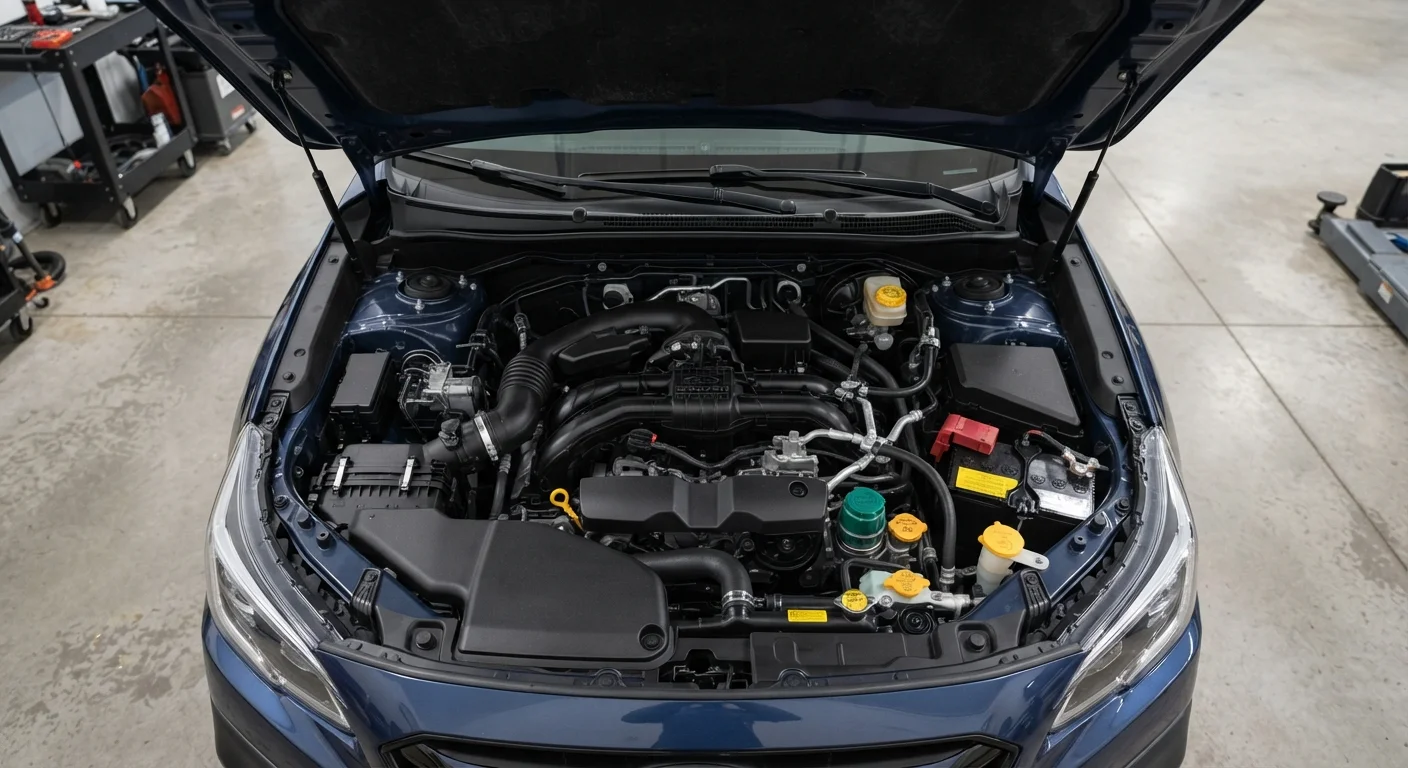
Photo: CoralScripts.com | Explore, Discover, Engage editorial
—— In This Article
Key Takeaways
- Each vehicle fluid has a unique chemical job; degradation happens through heat, moisture, and contamination - not just age.
- Brake fluid absorbs moisture over time, reducing its boiling point and compromising stopping power even when the level looks fine.
- Coolant, transmission fluid, power steering fluid, and differential fluid all require periodic inspection or replacement on distinct schedules.
- Color and smell are often the most reliable indicators that a fluid has degraded and needs professional attention.
- Many fluid problems give early warning signs - catching them before failure is far cheaper than repairing the damage that follows.
Why Other Fluids Deserve the Same Attention as Engine Oil
Most drivers have internalized the engine oil change schedule. But the engine bay contains a collection of fluids that are just as consequential - and far less discussed. Each one performs a specific chemical or hydraulic function, and each degrades through a different mechanism. Letting any one of them fall outside acceptable condition doesn't just cause inconvenience; it can lead to component failure that costs multiples of what routine maintenance would have.
This isn't a checklist of things to top off and forget. Understanding why each fluid degrades - and what symptoms precede failure - allows you to make informed decisions rather than reactive ones. For a broader grounding in the terminology used when mechanics discuss these systems, see our automotive terminology guide.
Check Fluid Color, Not Just Level
Fluid levels can appear normal even when the fluid itself has degraded past the point of effectiveness. Make it a habit to assess color and smell alongside level. Most fluids have a characteristic fresh color - brake fluid is clear to light yellow, ATF is red or amber, coolant is typically green, orange, or pink depending on formulation. Dark, murky, or foul-smelling fluid is a more actionable signal than a dipstick reading alone.
The Six Fluids Every Driver Should Understand
Engine Coolant (Antifreeze)
Coolant circulates through the engine and radiator to regulate operating temperature - preventing both overheating in summer and freezing in winter. It's a mixture of water and ethylene or propylene glycol, along with a package of corrosion inhibitors. Those inhibitors deplete over time through a process called additive breakdown, leaving the coolant acidic enough to corrode aluminum components, gaskets, and water pump seals.
The most common replacement intervals range from two to five years depending on the formulation (conventional vs. extended-life), but color alone isn't a reliable indicator - test strips or a refractometer give a more accurate read. Warning signs include a sweet smell from the engine bay, white steam from the hood, or a rising temperature gauge. A milky appearance in the oil cap (not the coolant itself) may indicate a head gasket failure allowing the two fluids to mix - a situation requiring immediate professional diagnosis.
Depleted corrosion inhibitors allow coolant to become acidic, quietly attacking aluminum components and seals.
Brake Fluid
Brake fluid is a hydraulic fluid that transmits the mechanical force of your foot pressing the pedal into clamping force at each wheel's caliper or wheel cylinder. Most vehicles use a glycol-ether-based fluid classified as DOT 3, DOT 4, or DOT 5.1 - the number reflecting the fluid's minimum dry and wet boiling points.
The critical degradation mechanism is hygroscopy: brake fluid actively absorbs moisture from the atmosphere through the brake lines and reservoir. As water content climbs above roughly 3%, the wet boiling point drops significantly. Under hard braking, this can cause vapor lock - a condition where the fluid boils and compresses (unlike liquid), resulting in a sudden loss of pedal firmness. This is why brake fluid condition matters even when the level appears normal. Most manufacturers recommend replacement every two years regardless of mileage. A spongy or unusually soft pedal feel warrants prompt inspection; for more on interpreting pedal feedback, see what brake feel tells you.
Brake fluid absorbs moisture over time, lowering its boiling point and creating risk of vapor lock under hard braking.
Automatic Transmission Fluid (ATF)
Automatic transmission fluid serves multiple simultaneous roles: it lubricates gear sets and bearings, transfers power through the torque converter, actuates hydraulic shift valves, and cools the transmission. It also contains friction modifiers that are engineered to provide the precise slip characteristics each transmission's clutch packs require - which is why using the wrong ATF specification can cause shift quality problems or accelerated wear.
Heat is ATF's primary enemy. Every 20°F above the normal operating range is estimated to roughly halve the fluid's service life, according to general principles widely cited in transmission engineering. Degraded ATF appears dark brown or black (fresh fluid is typically red or amber) and may have a burnt smell. Symptoms of degraded transmission fluid include delayed or rough shifts, slipping between gears, and unusual shuddering. Many modern vehicles feature sealed transmissions with no dipstick - consult the owner's manual or a mechanic rather than assuming the fluid is maintenance-free indefinitely.
Heat degrades ATF faster than any other factor, and the wrong fluid specification can cause shift problems even when the level is correct.
Power Steering Fluid
Hydraulic power steering systems use pressurized fluid to reduce the steering effort required to turn the wheels, particularly at low speeds. The fluid lubricates the power steering pump, rack seals, and hoses while also acting as the hydraulic medium. Note that an increasing share of modern vehicles use electric power steering (EPS), which eliminates this fluid entirely - check whether your vehicle has a hydraulic or electric system before looking for a reservoir.
Power steering fluid degrades through oxidation, heat cycling, and seal contamination. Degraded fluid can appear dark brown or contain visible particles. Symptoms include a whining or groaning noise when turning - most pronounced at full lock - and increased steering effort. Foam or bubbles in the reservoir indicate either a low level drawing air or a failing seal allowing air into the system. Leaks are relatively common and are usually visible as oily residue around the rack, hoses, or pump.
A whining noise when turning the wheel at low speed is often the first audible sign that power steering fluid or the pump needs attention.
Differential and Transfer Case Fluid
The differential distributes torque between driven wheels while allowing them to rotate at different speeds through corners. Rear-wheel-drive vehicles have a rear differential; front-wheel-drive vehicles typically integrate this function into the transaxle; all-wheel-drive and four-wheel-drive vehicles may have front differentials, rear differentials, and a transfer case - each potentially requiring its own specific fluid.
Differential fluid (gear oil) is typically much heavier than engine oil, rated in viscosity grades such as 75W-90 or 80W-140. It degrades through shear breakdown, oxidation, and metal particle contamination from normal gear wear. Limited-slip differentials require fluid with specific friction modifiers; using standard gear oil in an LSD will cause chatter through corners and accelerate clutch pack wear. These fluids are often overlooked entirely because there's no warning light and no obvious symptom until wear is advanced - checking the owner's manual for service intervals (often every 30,000-60,000 miles) is the most reliable approach.
Limited-slip differentials require friction-modifier-specific fluid; standard gear oil causes chatter and premature clutch pack wear.
Windshield Washer Fluid
Washer fluid is often dismissed as trivial, but it performs a meaningful safety function: maintaining forward visibility. Unlike plain water, purpose-formulated washer fluid contains surfactants to cut road grime and bug residue, along with antifreeze agents that prevent the reservoir and lines from freezing and rupturing in cold weather. Using water alone - especially in climates that see sub-freezing temperatures - risks cracking the reservoir or blocking jets at exactly the moment you need them.
Summer and winter formulations differ in freeze protection level; it's worth checking the rating on the label against typical temperatures in your region. While washer fluid doesn't degrade in the way hydraulic or lubricating fluids do, contamination (from dirty funnels or mixing low-quality fluid) can leave streaks or clog the fine nozzle jets. Refilling it regularly also creates a natural reminder to visually inspect the reservoir area for any staining that might suggest a leak from a nearby system.
Using water instead of washer fluid in freezing conditions risks cracking the reservoir and disabling your visibility system when you need it most.
Fluid Specifications Vary by Vehicle
Not all fluids are interchangeable across makes and models. Automatic transmission fluids, coolants, and differential gear oils are often formulated to specific manufacturer standards - using the wrong specification can cause compatibility problems even if the fluid type is technically correct. Always cross-reference your owner's manual or consult a qualified mechanic before topping off or replacing any fluid, particularly in sealed or dealer-serviced systems. This is especially relevant if you've purchased a used vehicle without complete service records.
Monitoring Fluids as Part of Routine Upkeep
Fluid condition rarely changes overnight - degradation is gradual. The practical approach is to build a brief inspection habit: check levels and color at each oil change interval, and consult your owner's manual for fluid-specific replacement intervals. Temperature extremes accelerate degradation for nearly every fluid on this list, making seasonal maintenance checks a natural opportunity to assess the whole system.
If you're uncertain about any fluid's condition, a qualified mechanic can test most fluids inexpensively. Proactive fluid management is covered in more detail in our fluid checks guide, and for broader vehicle upkeep context, the Car Maintenance hub is a useful reference.

Cars & Driving Editorial Team
Cars & Driving Editorial Team is the collective byline for our editorial team and contributor network. Articles published under this byline or an editorial pen name are researched, written, and reviewed according to our editorial standards for clarity, consistency, and independence before publication.
View author profile