
Reading a Tyre Sidewall: What Those Numbers and Letters Actually Mean
That string of numbers on your tyre isn't random. Learn how to decode tyre size, load rating, speed index, and more.
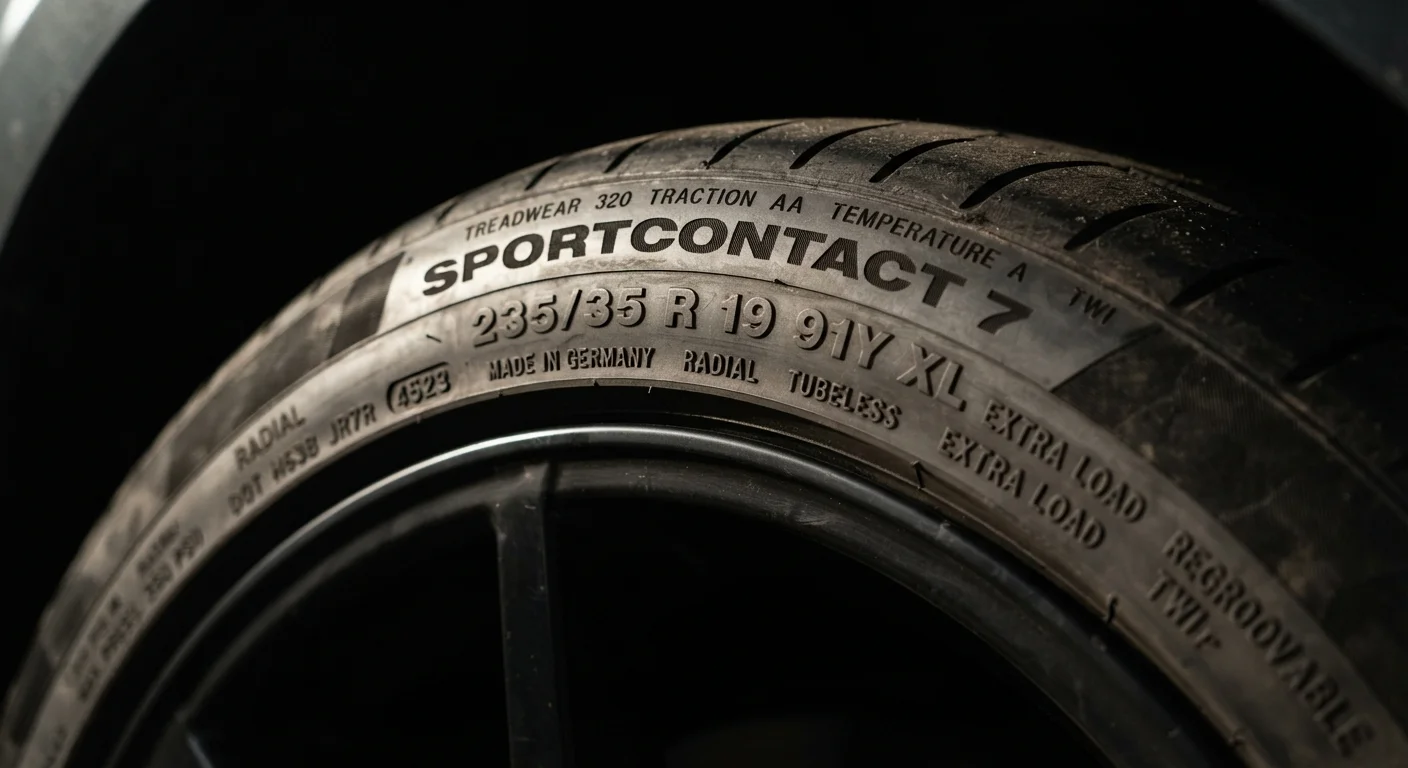
Photo: CoralScripts.com | Explore, Discover, Engage editorial
—— In This Article
The Anatomy of a Tyre Code
That seemingly random string of characters stamped into your tyre sidewall - something like P215/65R16 98H - follows a precise international standard. Each segment communicates a specific engineering parameter. Understanding it means you can verify you're running the correct tyre for your vehicle, confirm a replacement matches spec, and make informed decisions when talking to a tyre shop. For broader automotive terminology context, see our automotive terminology reference.
| Example code | P215/65R16 98H |
| Section width unit | Millimeters |
| Aspect ratio basis | Percentage of section width |
| Rim diameter unit | Inches |
| Load index 98 = max load | 1,653 lbs per tyre (Standard load index table) |
| Speed rating H | 130 mph (210 km/h) (SAE/ISO speed symbol standard) |
| DOT date code format | Last 4 digits: WWYY (week + year) |
| Common service type prefixes | P (Passenger), LT (Light Truck), ST (Special Trailer) |
Here's how to read the code segment by segment, left to right.
Breaking Down Each Segment
Service Type Prefix
The first one or two letters indicate the tyre's intended service class. P stands for passenger vehicle, conforming to US P-metric standards. LT (Light Truck) tyres are engineered for heavier loads and higher inflation pressures. ST (Special Trailer) tyres are rated for trailer axles only and must never be used on a drive or steer axle. Some tyres carry no prefix at all - these follow Euro-metric standards, which use slightly different load capacity calculations. Using an LT tyre where a P-metric is specified, or vice versa, can affect ride quality, load ratings, and even handling balance.
Section Width
The three-digit number following the prefix - 215 in our example - is the tyre's section width measured in millimeters from sidewall to sidewall at the tyre's widest point when mounted on the specified rim width and inflated to recommended pressure. A wider section width generally increases the contact patch but also affects aerodynamic drag and fuel consumption.
Aspect Ratio
After the slash, the two-digit number - 65 - is the aspect ratio: the tyre's sidewall height expressed as a percentage of section width. A 65-series tyre has a sidewall height equal to 65% of its 215 mm width, or roughly 140 mm. Lower aspect ratios (40, 45) signal a shorter, stiffer sidewall common on performance fitments; higher ratios (70, 75) indicate a taller sidewall that absorbs more road shock - typical on trucks and SUVs.
Construction Type
The letter following the aspect ratio describes internal construction. R - by far the most common - stands for radial, in which the tyre's internal ply cords run perpendicular to the direction of travel. Nearly all modern passenger and light-truck tyres are radial. D (diagonal bias) construction is still found on some trailers, motorcycles, and vintage vehicles.
Rim Diameter
The number after the construction letter - 16 - is the wheel rim diameter in inches. This must match your wheel exactly; a 17-inch tyre physically cannot seat on a 16-inch rim.
Load Index and Speed Rating
The final group, 98H, packs two critical ratings into a compact format. The numeric load index (98 in this case) maps to a maximum load capacity per tyre - 98 corresponds to 1,653 lbs. The letter is the speed rating, indicating the maximum sustained speed the tyre is certified to handle: H is rated to 130 mph (210 km/h). Never install a tyre with a lower speed rating than your vehicle manufacturer specifies; downgrading load index is equally inadvisable without consulting a qualified tyre professional.
Section Width
The tyre's width in millimeters measured from the outer sidewall to the inner sidewall at the tyre's widest point, when mounted on the specified rim and inflated correctly.
Aspect Ratio
The ratio of a tyre's sidewall height to its section width, expressed as a percentage. A lower aspect ratio means a shorter, stiffer sidewall; a higher ratio means a taller, more compliant one.
Load Index
A standardized numeric code that maps to the maximum load capacity a single tyre can carry at its rated inflation pressure. Replacing a tyre with one of a lower load index than specified is not recommended without professional guidance.
Speed Rating
A letter code indicating the maximum sustained speed a tyre is certified to handle under load. Common ratings include H (130 mph), V (149 mph), and W (168 mph). The vehicle manufacturer specifies a minimum required speed rating.
UTQG
Uniform Tire Quality Grading - a US government-mandated rating system covering treadwear, wet traction, and heat resistance. Grades allow comparative evaluation across passenger tyre models.
Three-Peak Mountain Snowflake (3PMSF)
A symbol on the tyre sidewall indicating the tyre has passed standardized tests for severe snow traction. It is a stronger indicator of winter performance than the simpler M+S designation.
Additional Markings Worth Knowing
Beyond the primary size code, sidewalls carry several additional designations that matter for safety and compliance.
- DOT Code: The Department of Transportation serial number confirms the tyre meets US safety standards. The last four digits reveal the manufacturing date - the first two indicate the week, the last two the year. A tyre reading 2319 was made in the 23rd week of 2019. Tyre industry guidance generally recommends inspecting tyres six years after manufacture and considering replacement at ten years regardless of apparent tread depth.
- UTQG Rating: The Uniform Tire Quality Grading system, required on most passenger tyres sold in the US, provides three grades: Treadwear (a comparative wear index - higher numbers indicate longer projected wear), Traction (AA, A, B, or C - measures wet stopping ability), and Temperature (A, B, or C - heat resistance at speed).
- M+S / Three-Peak Mountain Snowflake: M+S (mud and snow) is a self-certification that meets a basic tread pattern criterion. The three-peak mountain snowflake (3PMSF) symbol, by contrast, is earned through standardized snow traction testing and is the meaningful indicator of genuine winter capability.
Interpreting tyre wear patterns alongside these codes gives you a complete picture of tyre condition - see our guide to reading tyre wear before failure for the physical inspection side of the equation. And if your dashboard is flagging a tyre pressure warning, our warning lights explainer walks through what those alerts mean in practice.

Cars & Driving Editorial Team
Cars & Driving Editorial Team is the collective byline for our editorial team and contributor network. Articles published under this byline or an editorial pen name are researched, written, and reviewed according to our editorial standards for clarity, consistency, and independence before publication.
View author profile