
Common Myths About Running on Low Fuel
Does a near-empty tank really damage your fuel pump? Separating fact from fiction on low-fuel driving habits.
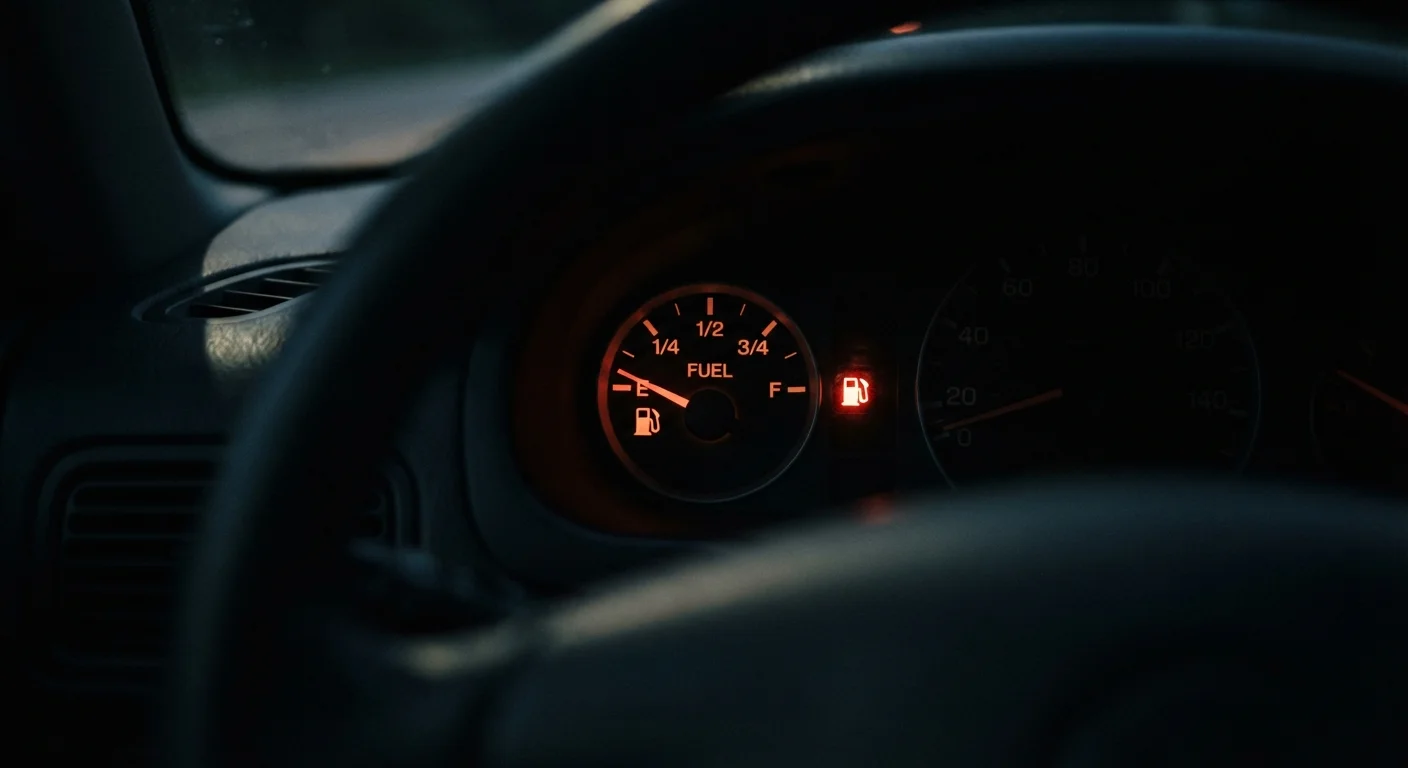
Photo: CoralScripts.com | Explore, Discover, Engage editorial
—— In This Article
Key Takeaways
- Regularly running your tank near empty can damage the fuel pump over time.
- The fuel gauge's 'E' mark does not mean the tank is completely dry.
- Modern fuel injectors are not meaningfully cleaned by low-fuel driving.
- Debris and sediment settle at the bottom of the tank, increasing risk when fuel is low.
- Consistently filling up before reaching a quarter-tank is a sound protective habit.
Why Low-Fuel Myths Persist
Most drivers have pushed past the low-fuel warning light at least once. Some do it routinely, reasoning that the car will be fine or that the gauge isn't accurate anyway. These habits are often reinforced by half-remembered advice or anecdotal experience - and repeated often enough, they harden into assumed fact.
The reality is more nuanced. Some low-fuel behavior is genuinely harmless in isolated instances. Other habits, practiced consistently over months and years, can contribute to real mechanical wear. Understanding which is which requires a basic grasp of how your fuel system actually works. For a broader look at how automotive folklore outlasts its accuracy, see our roundup of persistent car maintenance myths.
Myth
There's always a significant reserve after the low-fuel light comes on - enough for 50 or more miles.
Fact
Reserve distance varies widely by vehicle make, model, and driving conditions, and should never be relied upon as a guaranteed buffer.
The distance remaining when the warning light activates depends on tank size, the calibration of the sending unit, current fuel consumption rate, and even temperature. Some vehicles light the warning with as little as one gallon remaining; others illuminate it with closer to three. Driving at highway speeds, running the air conditioning, or carrying heavy loads all burn through that reserve faster. Treating the warning light as the start of a reliable 50-mile window is a misconception that occasionally leaves drivers stranded.
Myth
Running on low fuel cleans the fuel injectors by pulling fresh, concentrated fuel through the system.
Fact
Low fuel levels do not clean injectors; injector cleaning depends on fuel detergent additives, not tank volume.
Modern gasoline already contains detergent packages - mandated by federal Top Tier fuel standards for many grades - that work continuously to keep injector tips clean. The volume of fuel in the tank has no bearing on this process. Running low doesn't concentrate cleaning agents; it simply reduces the buffer available to the pump and increases the risk of drawing sediment. If injector deposits are a concern, fuel system service by a qualified technician is the appropriate solution.
Myth
The fuel gauge's 'E' means the tank is completely empty.
Fact
The 'E' position on most gauges is calibrated to indicate a low threshold, not an empty tank, to protect the fuel pump from running dry.
Manufacturers deliberately calibrate the 'E' mark to trigger before the tank is truly empty, providing a safety margin for both the driver and the fuel pump. However, this built-in buffer is not a license to delay refueling - its exact size is not published in most owner's manuals and it is not intended as a usable reserve. Relying on the 'E' mark as a routine stopping point still means the pump is operating in low-volume, high-heat conditions more than is ideal.
Myth
Fuel pumps are only damaged by running completely dry - occasional low-fuel driving is harmless.
Fact
Consistent low-fuel operation creates cumulative thermal and mechanical stress on the pump, even if the tank never runs completely dry.
The fuel pump in most modern vehicles is a submersible electric unit housed inside the tank. It depends on fuel contact for cooling. Repeated exposure to low fuel levels - meaning the pump draws from a shallow, warmer pool - gradually increases operating temperatures. Over tens of thousands of miles, this thermal stress shortens pump service life. The failure doesn't happen in one dramatic moment; it accumulates quietly, often making itself known as a hard-start condition, intermittent stalling, or eventual no-start. Fuel pump replacement is not a minor repair, making the preventive case for keeping the tank adequately filled a practical one.
What Low-Fuel Driving Actually Risks
The practical concern with habitual low-fuel operation centers on the fuel pump, which is located inside most modern fuel tanks. In the majority of contemporary vehicles, the pump relies on the surrounding fuel for both lubrication and cooling. When fuel levels are consistently low, the pump draws in warmer fuel - and occasionally air - which accelerates wear on its internal components.
~$400-$900
Typical fuel pump replacement cost (parts and labor)
Industry repair data from automotive service sources consistently places in-tank electric fuel pump replacement in this range, varying by vehicle type and labor market.
1-3 gallons
Estimated fuel remaining when low-fuel light activates
This range reflects variation across common vehicle segments; the exact threshold is set by the manufacturer and is not standardized across the industry.
There's also the matter of sediment. Over a vehicle's lifetime, small particles of rust, debris, and fuel byproducts accumulate at the bottom of the tank. Normally, these settle away from the pump's pickup tube when there's adequate fuel volume. Running near-empty forces the pump to work from that lower sediment layer more frequently, increasing the chance of contaminants reaching the fuel filter or injectors.
None of this means a single low-fuel incident will cause a failure. The concern is cumulative. Mechanics who service fuel system components consistently report that pumps from vehicles with a documented pattern of low-fuel operation often show accelerated wear. This fits the same pattern as other deferred-maintenance issues - see how small neglected habits compound into costly repairs for context.
Cold-Weather Low-Fuel Risk Is Higher
In freezing temperatures, moisture can accumulate more readily in a partially empty fuel tank, increasing the risk of fuel-line freeze in older vehicles or those with carbureted systems. While modern fuel-injected vehicles are less susceptible, maintaining a fuller tank in winter provides an added buffer against cold-start issues and keeps more fuel mass available to moderate temperature swings inside the tank.
Good fuel system hygiene is straightforward: aim to refuel when the gauge approaches a quarter-tank. It costs nothing extra over time and keeps the pump cooler, better lubricated, and away from bottom-of-tank sediment. Like skipping oil changes, the habit of running low rarely causes an immediate problem - but the cumulative effect is real and measurable.

Cars & Driving Editorial Team
Cars & Driving Editorial Team is the collective byline for our editorial team and contributor network. Articles published under this byline or an editorial pen name are researched, written, and reviewed according to our editorial standards for clarity, consistency, and independence before publication.
View author profile