
Things People Believe About Alaska Travel That Simply Aren't True
Midnight sun misconceptions, bear encounter myths, and false assumptions about accessibility—setting the record straight on visiting Alaska.
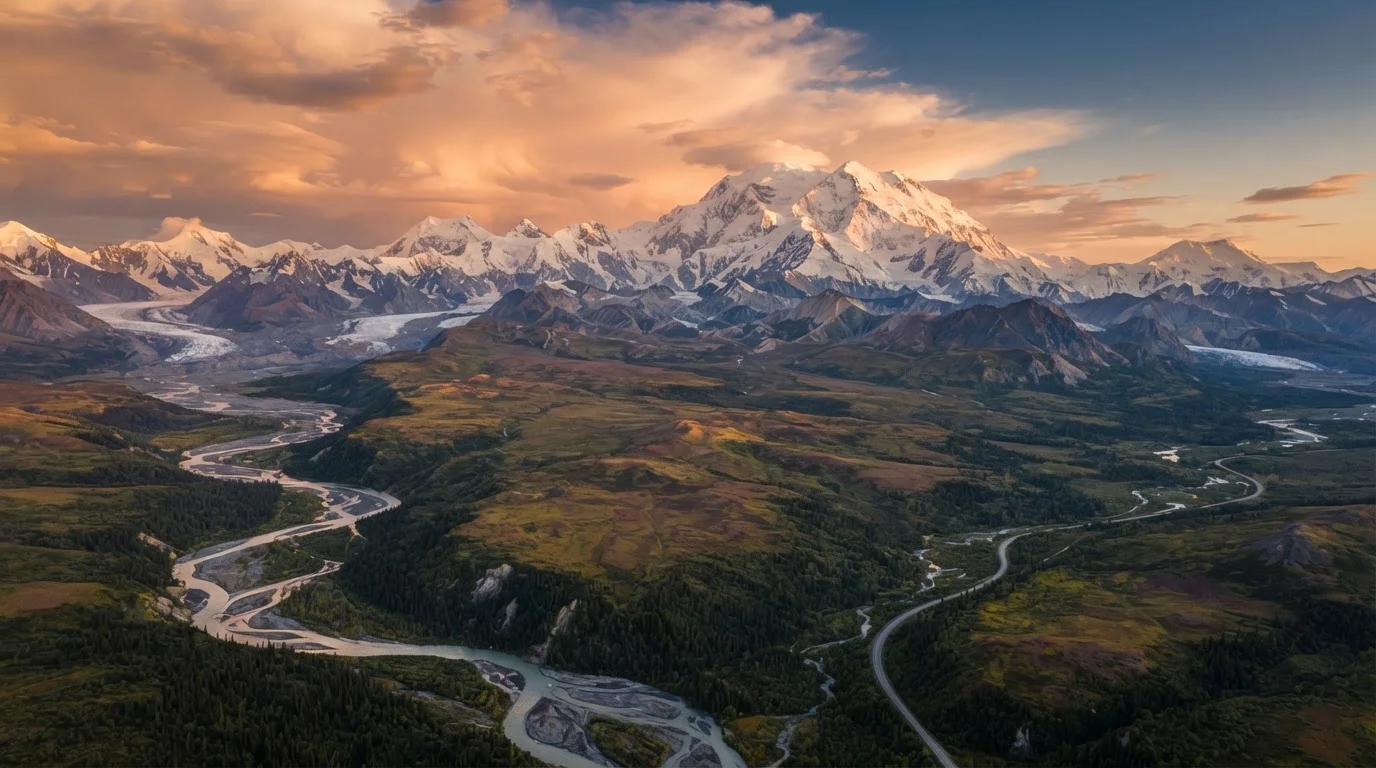
Photo: CoralScripts.com | Explore, Discover, Engage editorial
—— In This Article
Key Takeaways
- Alaska is reachable by road, ferry, and multiple airports — it is not as inaccessible as most people assume.
- Summer temperatures in Southcentral Alaska regularly climb into the 60s and 70s°F, far warmer than the perpetual-freeze stereotype.
- Bear encounters are genuinely rare when standard safety practices are followed; panic is rarely warranted.
- The midnight sun affects only part of Alaska and only during certain weeks — darkness is not entirely absent in summer.
- Visiting Alaska does not require a massive budget; careful planning can make it financially accessible.
Why Alaska Myths Persist
Alaska occupies an outsized place in the American imagination — a remote, frozen, bear-filled frontier at the edge of the continent. That mythology is vivid, but it routinely misleads travelers planning an actual trip. Misconceptions about climate, accessibility, wildlife danger, and cost cause some people to dismiss Alaska as a destination entirely, while others arrive underprepared because they assumed the opposite of the truth. Setting the record straight matters, because Alaska is one of the most geographically and ecologically diverse states in the country, and misinformation keeps too many curious travelers from experiencing it well.
Much like the persistent automotive folklore examined in our car maintenance myths roundup, Alaska travel myths tend to survive because they contain a kernel of truth wrapped in significant exaggeration. Below, we address the most common ones head-on.
Myth
Alaska is frozen year-round, so summer visits are still bitterly cold.
Fact
Southcentral Alaska experiences genuine summers, with Anchorage averaging highs in the mid-60s°F in July and occasional stretches into the 70s.
The "frozen tundra" image applies to specific regions and seasons, not the entire state across all months. Interior towns like Fairbanks can actually record some of the hottest temperatures in the state during June and July, sometimes exceeding 80°F. Southeastern Alaska, including Juneau and Ketchikan, is temperate rainforest territory — wet and mild, not arctic. Visitors should pack layers regardless, since conditions can shift quickly, but leaving summer clothes at home is a mistake most regret within the first afternoon.
Myth
It stays light 24 hours a day all summer long, everywhere in Alaska.
Fact
The midnight sun is a real phenomenon but is most extreme above the Arctic Circle; in Anchorage, midsummer brings about 19.5 hours of daylight, not round-the-clock light.
Fairbanks and communities north of the Arctic Circle — such as Utqiaġvik (formerly Barrow) — do experience periods of true midnight sun when the sun never fully sets. But Anchorage, which is where most visitors land, sits well south of the Arctic Circle and still experiences dusk in summer, even if twilight stretches late into the evening. The practical implication for travelers: bring a sleep mask. The long days are energizing and wonderful for sightseeing, but hotels rarely have fully blackout curtains, and your body clock will notice the difference.
Myth
Bear attacks are frequent and nearly unavoidable when hiking in Alaska.
Fact
Bear encounters that escalate to attacks are statistically rare, particularly when standard wildlife safety protocols are followed consistently.
Alaska does have significant brown bear and black bear populations, and encounters do occur. However, the Alaska Department of Fish and Game and the National Park Service document that most encounters do not result in attacks, and most attacks occur when a bear is surprised at close range or when a person acts in ways that provoke defensive behavior. Carrying bear spray, hiking in groups, making noise on brushy trails, and storing food correctly are practical and effective measures. Fear of bears is a reasonable motivator to follow these protocols — but treating an Alaska hike as equivalent to combat is neither accurate nor useful. Wildlife-aware hiking is a skill, not a gamble.
Myth
You need to fly or take a cruise — there's no practical way to drive to Alaska.
Fact
The Alaska Highway (ALCAN) provides a road route from the contiguous US through Canada into Alaska, and the Alaska Marine Highway offers a ferry alternative for vehicle passengers.
Driving to Alaska is a well-established travel option, though it requires genuine preparation. The Alaska Highway runs roughly 1,390 miles from Dawson Creek, British Columbia to Delta Junction, Alaska — a multiday drive through spectacular Canadian wilderness. Travelers must cross into Canada, so valid documentation and knowledge of current border crossing requirements are essential; always verify entry requirements with official US and Canadian government sources before departing, as rules change. The Alaska Marine Highway System is another option, allowing passengers to bring vehicles aboard ferries serving Southeast Alaska communities. Neither route is effortless, but both are entirely practical for prepared road-trippers.
Myth
Alaska is only worth visiting in summer — other seasons have nothing to offer.
Fact
Winter brings the northern lights, dog mushing events, and uncrowded wilderness; shoulder seasons offer compelling wildlife and dramatic landscapes at lower visitor volume.
Summer is peak season for a reason: long days, accessible trails, and active wildlife viewing. But the trade-off is higher prices and more crowded popular corridors. Winter visitors in the Interior have strong odds of witnessing the aurora borealis on clear nights, and communities like Fairbanks and Talkeetna host distinctive winter festivals and mushing traditions. Spring is underrated for birding and river breakup — a dramatic Alaska seasonal event. Fall brings vivid tundra colors across the Interior. Each season has a distinct character; dismissing three-quarters of the year means missing a substantial part of what Alaska actually is.
Planning an Alaska Trip With Clear Eyes
Accurate expectations are the foundation of a successful Alaska trip. The state spans six time zones worth of longitude and contains terrain ranging from temperate rainforest in the Southeast to Arctic tundra on the North Slope — no single generalization covers it. Travelers who understand this tend to plan more deliberately: choosing a specific region, researching its actual seasonal conditions, and building an itinerary around realistic logistics rather than Hollywood imagery.
663,268 sq mi
Total area of Alaska
Alaska is larger than the next three largest US states combined, according to the US Census Bureau — scale that most visitors genuinely underestimate when planning driving times.
~2.3 million
Annual visitors to Denali National Park
The National Park Service reports that Denali receives roughly 600,000–700,000 visitors annually in recent years, illustrating that Alaska's most iconic park is far more visited than the "inaccessible frontier" myth suggests.
19.5 hours
Daylight in Anchorage at summer solstice
The National Weather Service Anchorage office documents approximately 19 hours and 22 minutes of daylight around June 21 — dramatic, but not the round-the-clock sun many travelers expect.
Accessibility is also more varied than most people realize. The Alaska Marine Highway System connects Southeast communities by ferry. The Alaska Railroad links Anchorage, Fairbanks, and Denali. Multiple regional airports serve destinations well beyond the main hubs. Road travelers can enter via the Alaska Highway through Canada, though that route requires advance preparation and awareness of border entry requirements — always verify current entry rules with official government sources before traveling.
Wildlife safety deserves clear-eyed respect rather than either panic or dismissal. Alaska Department of Fish and Game guidelines — carrying bear spray, making noise on trails, storing food properly — are straightforward and effective. The same rational approach that savvy international travelers apply to unfamiliar environments, as explored in our international travel safety misconceptions piece, applies equally here: neither fear nor overconfidence serves you well.
Budget matters, too. Alaska is not cheap, but it is not uniformly expensive. Public campgrounds, state park cabins available through reservation systems, and shoulder-season travel (May and September) can reduce costs meaningfully. The key is planning well in advance rather than assuming last-minute options will be available in remote areas.
Verify Entry Requirements Before You Travel
Travelers driving to Alaska through Canada, or arriving by ferry from Canadian ports, must meet current Canadian entry requirements in addition to US documentation standards. Border crossing rules, documentation requirements, and any health-related protocols can change. Always consult official US Customs and Border Protection and the Government of Canada websites well in advance of your departure date — do not rely on traveler forums or social media for current regulatory information.

Travel & Places Editorial Team
Travel & Places Editorial Team is the collective byline for our editorial team and contributor network. Articles published under this byline or an editorial pen name are researched, written, and reviewed according to our editorial standards for clarity, consistency, and independence before publication.
View author profile