
Hawaii Beyond the Beach: Volcanic Terrain, Rainforests, and Cultural History
Kīlauea's lava fields, Waimea Canyon, and living Hawaiian cultural traditions offer depth that extends far past the shoreline.
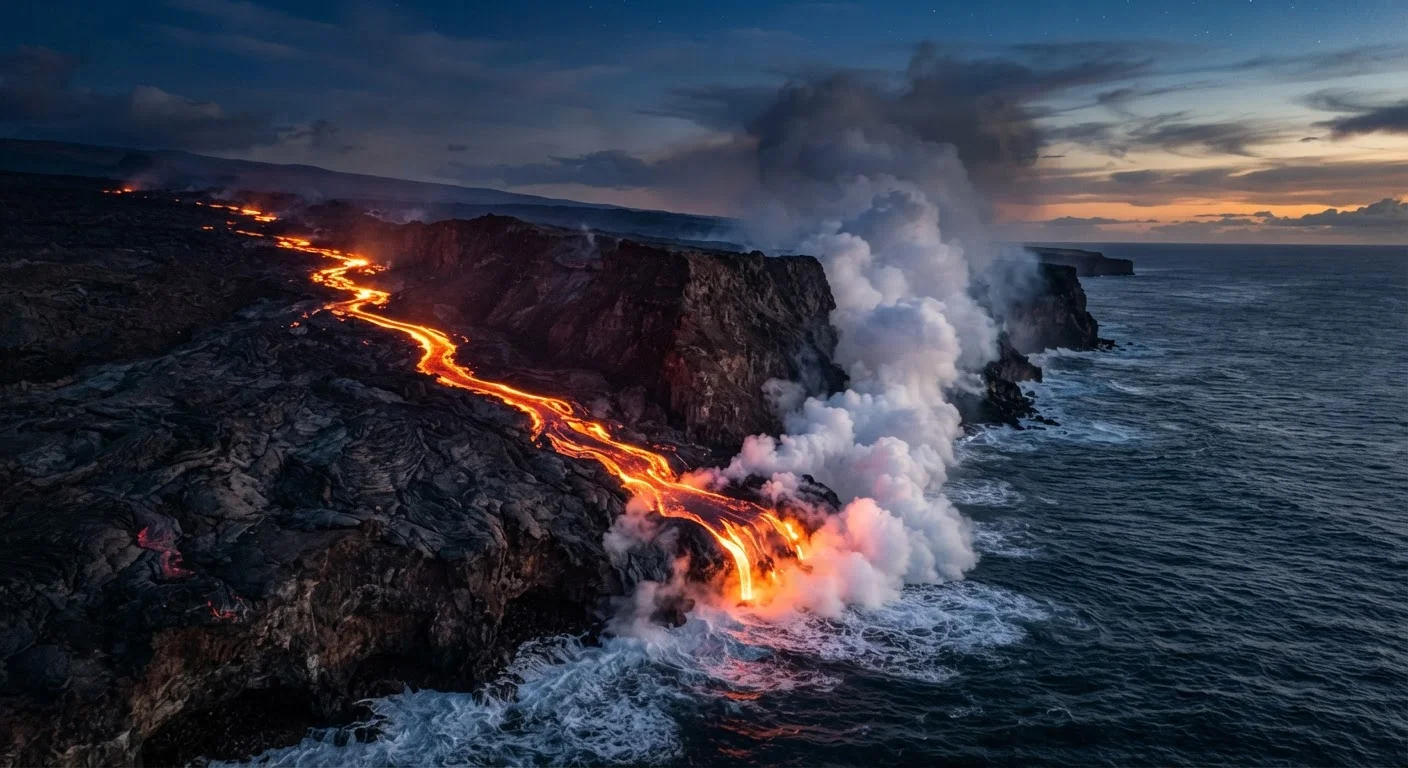
Photo: CoralScripts.com | Explore, Discover, Engage editorial
—— In This Article
Key Takeaways
- Hawaii Volcanoes National Park on the Big Island offers active volcanic viewing and accessible lava tube exploration.
- Kauaʻi's Waimea Canyon stretches over 14 miles and reaches depths of 3,600 feet — often called the 'Grand Canyon of the Pacific.'
- Native Hawaiian cultural traditions, including hula, navigation, and land stewardship, are actively practiced and transmitted today.
- Each Hawaiian island has a distinct ecological and geological character; single-island itineraries miss the archipelago's full range.
- Verify trail access, eruption activity, and entry conditions with the National Park Service before visiting volcanic areas.
Hawaii's Geological Foundation: Islands Born from Fire
The Hawaiian archipelago exists because of a stationary hotspot beneath the Pacific Plate — a mantle plume that has been punching volcanic islands through the ocean floor for roughly 70 million years. As the plate drifts northwest, older islands erode into atolls and seamounts while the Big Island (Hawaiʻi Island) remains the youngest and most geologically active landmass in the chain. This process is ongoing: the underwater volcano Lōʻihi is building a future island roughly 22 miles southeast of the Big Island's coast.
Understanding this geology reframes how visitors experience Hawaii. The dramatic contrast between the Big Island's black lava deserts and its Hāmākua Coast rainforests isn't random scenery — it's the direct result of trade wind patterns and volcanic age. Leeward sides receive little rain and remain stark and arid; windward slopes catch moisture and support dense, species-rich forest. The biodiversity that results is extraordinary, comparable in significance to ecosystems explored in the world's most biodiverse habitats.
323,431
Acres in Hawaii Volcanoes National Park
According to the National Park Service, the park spans from sea level to the summit of Mauna Loa.
3,600 ft
Maximum depth of Waimea Canyon, Kauaʻi
Waimea Canyon is often cited as the largest canyon in the Pacific, stretching over 14 miles in length.
~1,500
Years of continuous Hawaiian settlement
Archaeological and oral historical evidence indicates Polynesian settlement of the Hawaiian Islands dating back roughly 1,500 years.
Hawaii Volcanoes National Park: What to Know Before You Go
Established in 1916, Hawaii Volcanoes National Park covers 323,431 acres spanning from sea level to the summit of Mauna Loa at 13,677 feet. The park's two active volcanoes — Kīlauea and Mauna Loa — are among the most studied on Earth. Kīlauea's summit caldera, Halemaʻumaʻu, has hosted an active lava lake during multiple recent eruption episodes, though conditions change; confirm current volcanic activity with the U.S. Geological Survey's Hawaiian Volcano Observatory before planning around specific lava viewing.
Key park experiences include the 11-mile Crater Rim Drive, the Thurston Lava Tube (a walk-through lava tunnel formed by cooling basalt), and the Chain of Craters Road, which descends nearly 4,000 feet to the coast past preserved petroglyphs at Puʻuloa. The Kīpukapuaulu loop trail offers a contrasting experience: a forested island of older lava surrounded by more recent flows, dense with native birds and plants.
Volcanic Hazards Require Active Precaution
Active volcanic areas produce lava haze (laze) where flows meet the ocean, volcanic smog (vog) from ongoing emissions, and sudden ground instability near new lava surfaces. These conditions pose genuine respiratory and physical risks. Always follow posted closures, heed ranger instructions, and consult the Hawaiian Volcano Observatory for real-time hazard updates before entering volcanic terrain.
The park's Visitor Center at Kīlauea provides real-time eruption updates, trail condition maps, and ranger-led programs. Conditions in volcanic parks shift rapidly — always consult ranger staff on the day of your visit.
Visit Kīlauea's active areas in the early morning or at dusk — thermal glow is more visible in low light, and crowds are thinner than at midday.
Volcanic glow is most dramatic against a dark or dim sky, and park ranger programs timed for evening often provide the best interpretive context for eruption viewing.
Book Haleakalā summit sunrise permits through recreation.gov at least 60 days in advance — they routinely sell out, and walk-up access is not guaranteed.
The National Park Service implemented the permit system specifically to manage the extreme demand for sunrise visits, and availability regularly exhausts within minutes of release.
Rainforests, Canyons, and Interior Landscapes
Kauaʻi's interior is one of the most geologically dramatic landscapes in the United States. Waimea Canyon — carved by the Waimea River over millions of years through volcanic rock — reaches depths of approximately 3,600 feet and spans more than 14 miles. The overlooks along Highway 550 reveal layered red and brown canyon walls that genuinely warrant the comparison to the Grand Canyon. Above the canyon, Kokeʻe State Park opens into native montane forest and the edge of the Alakaʻi Swamp, one of the highest-elevation tropical wetlands in the world.
The Big Island's Hilo side offers a different rainforest encounter. ʻAkaka Falls State Park features a short loop trail through bamboo groves and tropical vegetation to a 442-foot waterfall. The Haʻikū Stairs on Oʻahu — though access has been legally restricted due to safety concerns — illustrates how rugged and inaccessible much of the islands' interiors remain. Maui's Haleakalā National Park, primarily known for its summit sunrise, also preserves the Kīpahulu section on the island's eastern coast: a lush valley of pools, waterfalls, and native forest accessible via the Road to Hāna.
Road to Hāna: Plan for the Journey, Not Just the Destination
The Road to Hāna is a 64-mile route with over 600 curves and 59 bridges. Many of Maui's most rewarding stops — bamboo forests, waterfall pools, roadside fruit stands — are along the route itself, not at its end. Start early, drive the full loop if road conditions allow, and check current road closures with the Maui County Department of Public Works before departure.
Hawaiian Cultural History: Beyond the Hula Stereotype
Hawaiian civilization developed over roughly 1,500 years of Polynesian settlement, producing sophisticated systems of agriculture, aquaculture, astronomy, and governance. The ahupuaʻa land-management system divided islands into wedge-shaped sections from mountain to sea, ensuring communities had access to every ecological zone. Remnants of fishponds — coastal enclosures used to cultivate fish — are still visible on Molokaʻi and the Big Island, some actively restored by Native Hawaiian organizations.
Hula is a living, complex art form — not a performance artifact. Traditional hula kahiko is chanted, accompanied by percussion instruments, and conveys genealogical history, natural phenomena, and spiritual meaning. The Merrie Monarch Festival, held annually in Hilo, is widely regarded as the foremost hula competition in the world and attracts hundreds of performers from across the islands and diaspora. Visitors seeking genuine cultural context can look for events hosted by community organizations, cultural centers such as the Polynesian Cultural Center on Oʻahu, or interpretive programs offered through the National Park Service at sites like Puʻuhonua o Hōnaunau (Place of Refuge) on the Big Island.
“The land is the chief. We are its children. Understanding that relationship is the beginning of understanding Hawaiian culture.”
— Nainoa Thompson, Master navigator and president of the Polynesian Voyaging Society
Planning Your Interior Hawaii Experience
Each island rewards a distinct itinerary. The Big Island is essential for volcanic terrain and requires at least three to four days to sample its contrasting regions. Kauaʻi's canyon and rainforest landscapes are most accessible with a rental car, as public transit options are limited. Maui's Haleakalā is a half-day excursion from most resort areas, though summit permits for sunrise viewing are required and fill quickly — reserve through the recreation.gov system well in advance.
Island-hopping adds logistical complexity: inter-island flights are frequent but add cost and time. Travelers focused on non-beach experiences would benefit from choosing one or two islands and going deeper rather than skimming multiple islands shallowly. For broader context on planning international or multi-destination trips, the International Travel hub offers practical frameworks that translate well to multi-island domestic planning.
Accessibility varies significantly by site. Crater Rim Drive is largely accessible by vehicle, but many interior trails involve uneven lava, elevation gain, and limited facilities. Check trail conditions with the relevant state or national park authority, and verify road status — particularly on Kauaʻi's north shore and Maui's Road to Hāna — before departure.
Travel conditions, trail access, volcanic activity, and entry requirements can change. Verify current information with the National Park Service, Hawaii Tourism Authority, and relevant state agencies before your trip.

Travel & Places Editorial Team
Travel & Places Editorial Team is the collective byline for our editorial team and contributor network. Articles published under this byline or an editorial pen name are researched, written, and reviewed according to our editorial standards for clarity, consistency, and independence before publication.
View author profile