
Grooming Routines Across Different Coat Types
Short, long, double, and wire coats each need a different approach. A practical breakdown of grooming frequency, tools, and technique by coat type.
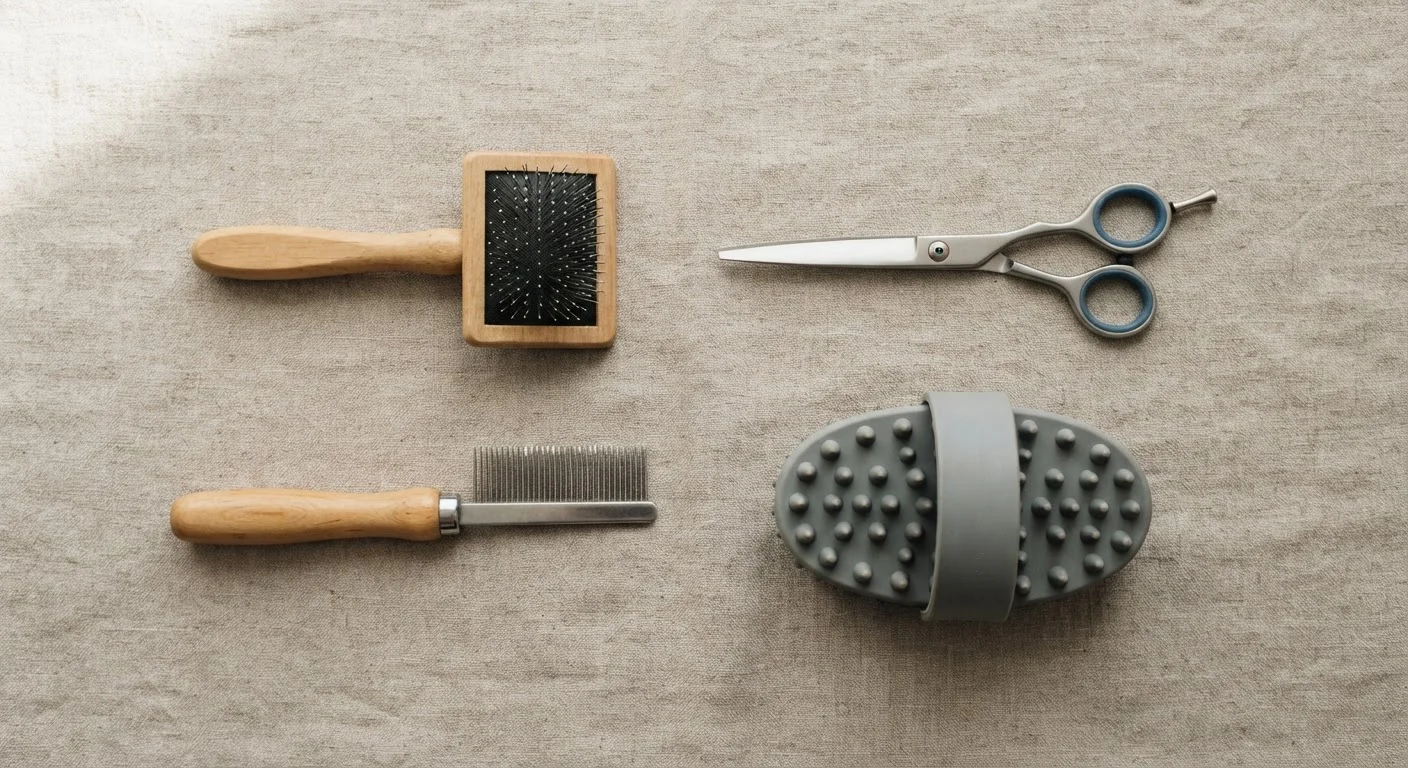
Photo: CoralScripts.com | Explore, Discover, Engage editorial
—— In This Article
Key Takeaways
- Coat type - not breed alone - determines which grooming tools, frequency, and techniques are appropriate.
- Double-coated dogs require deshedding during blow-out seasons, not shaving, to protect their natural insulation.
- Wire coats need hand-stripping or clipping to maintain texture; regular brushing alone is insufficient.
- Short coats are the lowest-maintenance but still benefit from weekly brushing and periodic bathing.
- Long coats demand daily or near-daily attention to prevent painful matting, especially around high-friction areas.
Why Coat Type Matters More Than You Think
Many new pet owners assume grooming is simply a matter of brushing more often for longer hair. In reality, coat structure - the number of layers, the hair shaft's shape, and how much the coat sheds - dictates nearly everything about the grooming process. Using the wrong brush on a double coat, for instance, can scratch the skin without ever reaching the dense undercoat where mats form.
If you're setting up routines for a new pet, identifying coat type early helps you budget time, choose appropriate tools, and avoid the two most common grooming mistakes: over-bathing and under-brushing.
| Short Coat | Long Coat | Double Coat | Wire Coat | |
|---|---|---|---|---|
| Brushing frequency | Weekly | Daily | 2-3x/week (daily when shedding) | Weekly, plus professional sessions |
| Bathing frequency | Every 4-6 weeks | Every 2-3 weeks | Every 4-6 weeks | Every 6-8 weeks |
| Primary tool | Rubber curry brush | Pin brush + fine comb | Undercoat rake | Stripping knife or clipper |
| Mat risk | Low | High | Moderate (undercoat) | Low to moderate |
| Professional grooming needed | Occasional | Every 6-8 weeks | Seasonal deshedding sessions | Every 8-12 weeks |
| Shedding level | Moderate | Moderate | High (seasonal) | Low |
Short Coats: Simple but Not Negligible
Short-coated dogs and cats - think Beagles, Boxers, or domestic shorthair cats - have a single or minimally layered coat that lies close to the skin. Their grooming needs are modest but shouldn't be skipped entirely.
- Frequency: Weekly brushing with a rubber curry brush or soft-bristle brush removes loose hair and distributes skin oils.
- Bathing: Every four to six weeks, or when visibly dirty. Over-bathing strips protective oils.
- Key watch areas: Ear canals, nail length, and skin folds (in breeds prone to them) require attention even when the coat itself is easy.
A rubber grooming mitt works particularly well on short coats and doubles as a bonding tool during calm handling sessions.
Start Grooming Early in Your Pet's Life
Introducing brushing, handling of paws, and ear checks during puppyhood or kittenhood builds tolerance that makes grooming far easier throughout the animal's life. Keep early sessions short and positive, pairing them with calm praise. Even a short-coated pet benefits from this early habituation.
Long Coats: Daily Commitment Required
Silky, flowing coats - found on breeds such as Afghan Hounds, Yorkshire Terriers, and Persian cats - are visually striking but structurally demanding. Without daily attention, friction areas like the armpits, behind the ears, and around the collar develop mats that can tighten painfully against the skin.
- Frequency: Daily brushing with a pin brush, followed by a fine-tooth comb to confirm no tangles remain at the root.
- Bathing: Every two to three weeks, using a coat-appropriate conditioner to reduce static and tangling.
- Detangling: Work from the ends upward using a dematting comb or detangling spray before attempting to brush through a knot. Never pull through a mat from the root.
Professional grooming every six to eight weeks can supplement a home routine, especially for maintaining a clean trim around the face and paws.
Double Coats: Seasonal Shedding and the Shaving Myth
Double-coated breeds - Huskies, Golden Retrievers, German Shepherds, Maine Coon cats - have a dense undercoat beneath a longer guard-hair layer. This structure regulates body temperature in both heat and cold. A common and damaging misconception is that shaving a double coat keeps the dog cooler in summer; it actually disrupts the coat's insulating function and can cause permanent texture changes.
- Frequency: Two to three times per week during low-shedding periods; daily during seasonal blow-out (typically spring and fall).
- Tools: An undercoat rake or deshedding brush reaches the dense inner layer without cutting guard hairs.
- Bathing: Every four to six weeks. Thorough drying is critical - a damp undercoat mats and can harbor skin irritation.
80%
Of shelter surrenders citing coat-related issues
Grooming-related difficulties, including unmanageable shedding and matting, are among the most commonly cited reasons owners report difficulty maintaining pet care, according to veterinary behavioral surveys.
2x/year
Peak shedding seasons for double-coated breeds
Most double-coated dogs experience two major coat blow-outs annually - typically in spring and fall - during which daily brushing is often necessary to manage loose undercoat.
Wire Coats: Texture Maintenance Through Stripping or Clipping
Wire-haired (or rough-coated) breeds - Wirehaired Fox Terriers, Border Terriers, many Schnauzers - have a harsh, bristly outer coat that doesn't shed in the conventional sense. Instead, dead coat clings to the follicle, dulling texture and potentially causing skin issues if not removed.
- Hand-stripping: The traditional technique involves plucking dead outer coat by hand or with a stripping knife. It preserves the coat's correct wiry texture and is preferred for show dogs.
- Clipping: A more accessible alternative for pet dogs, though it softens the coat texture over time since it cuts rather than pulls from the root.
- Frequency: Full stripping or clipping every eight to twelve weeks, with light tidying in between.
Routine veterinary visits are a good opportunity to ask your vet to assess coat and skin condition, particularly for wire-coated breeds prone to skin sensitivities.

Pets & Animal Life Editorial Team
Pets & Animal Life Editorial Team is the collective byline for our editorial team and contributor network. Articles published under this byline or an editorial pen name are researched, written, and reviewed according to our editorial standards for clarity, consistency, and independence before publication.
View author profile