
Cat Body Language: What Tail Position, Ears, and Slow Blinks Actually Signal
Cats communicate constantly through posture and subtle gestures. Learn what your cat is telling you with their tail, ears, and eyes.
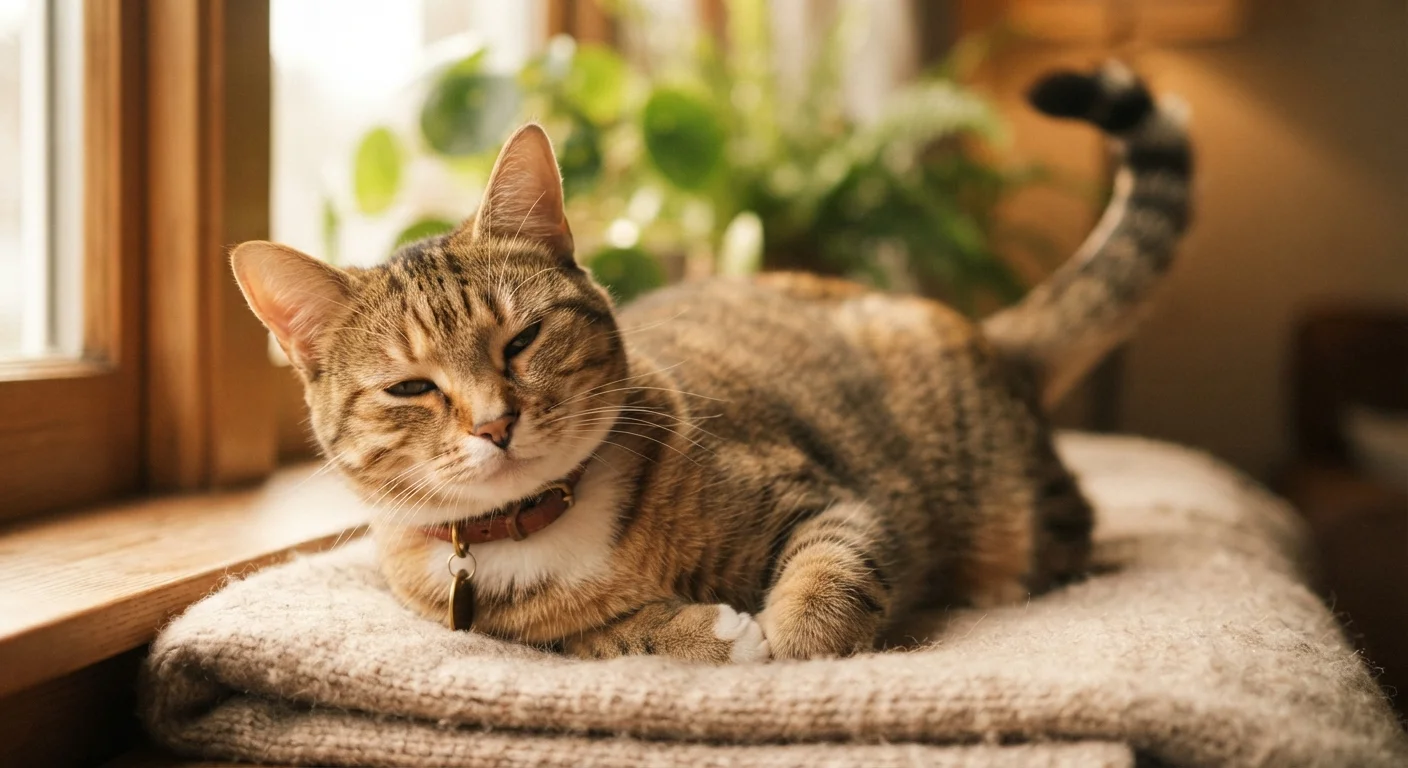
Photo: CoralScripts.com | Explore, Discover, Engage editorial
—— In This Article
Why Cats Rely on Body Language
Cats are not silent creatures - they are communicative ones, but most of their signaling happens through posture, movement, and facial expression rather than vocalisation. Domestic cats have developed a suite of visual signals shaped by millions of years of solitary predator evolution, and research in feline ethology confirms that these signals are consistent, readable, and often context-dependent.
Understanding what your cat is physically expressing is more than a novelty skill. Misreading stress signals as playfulness, or dismissing a tucked tail as random behavior, can erode the bond between cat and owner and - in some cases - obscure early signs of discomfort. For a broader look at how body language varies across species, see our guide to reading your pet's body language.
| Primary communication channels | Tail, ears, eyes, posture, whisker position |
| Tail-raised greeting meaning | Confident, friendly approach toward a trusted individual |
| Slow blink research | Study confirms cats return slow blinks and approach humans who initiate them (Humphrey et al., Scientific Reports, 2020) |
| Ear rotation range | Up to 180 degrees independently |
| Puffed tail cause | Involuntary piloerection triggered by fear or perceived threat |
| Lashing tail common misreading | Often mistaken for happiness; usually signals agitation or overstimulation |
Tail Position: The Mood Barometer
A cat's tail is arguably the most expressive part of its body. Researchers studying cat social behavior have documented distinct tail postures that map reliably onto emotional states:
- Tail raised vertically: A high, upright tail - particularly with a slight hook at the tip - signals confident approach and friendly intent. Cats greet trusted companions this way, including humans they consider part of their social group.
- Puffed or bristled tail: Piloerection (fur standing on end) is an involuntary response to fear or aggression. A puffed tail, often paired with an arched back, signals that the cat feels threatened and is attempting to appear larger.
- Tail tucked low or wrapped around the body: Submission, anxiety, or discomfort. A tail drawn tightly beneath the body indicates a cat that does not feel safe.
- Slow, wide lashing: Contrary to popular belief, a lashing tail in cats is not analogous to a wagging dog tail. Rapid or wide tail movement typically signals agitation, overstimulation, or predatory focus - not happiness.
- Gentle, low swishing: In a relaxed cat, a slow tail sway during alert observation can reflect concentration without tension.
Piloerection
The involuntary erection of fur caused by contraction of small muscles at the base of each hair follicle. In cats, it occurs during fear or threat responses and makes the animal appear larger.
Affiliative signal
A behavior that communicates friendly intent or social bonding between individuals. The slow blink is considered an affiliative signal in domestic cat-human interaction.
Ethology
The scientific study of animal behavior, typically in natural or semi-natural conditions. Feline ethology examines how cats communicate, hunt, and maintain social structures.
Overstimulation
A state in which repeated sensory input - such as prolonged petting - exceeds a cat's threshold for comfort, often leading to sudden defensive behavior like biting or swatting.
Ear Position and What It Reveals
A cat's ears can rotate up to 180 degrees independently, giving them extraordinary directional hearing - and making them an expressive communication channel. Key ear positions include:
- Forward-facing and upright: Alert, curious, or engaged. This is a neutral-to-positive state.
- Slightly rotated outward ("airplane ears"): An early warning sign of mild stress or irritation. Often seen mid-petting before a bite or swipe.
- Flattened fully sideways or pinned back: A clear defensive or fearful signal. Paired with a crouched body or hissing, this indicates a cat that may act defensively if cornered.
- Swiveling rapidly: The cat is actively scanning its environment and is aroused - not necessarily stressed, but highly alert.
Ear signals rarely appear in isolation. A complete behavioral read requires combining ear position with tail, posture, and facial muscle tension simultaneously. If your cat consistently displays flattened ears or other distress signals without an obvious cause, it may warrant veterinary attention - behavioral shifts can be early indicators of illness or pain.
Slow Blinks, Eye Shape, and Visual Communication
The slow blink - where a cat holds eye contact and then leisurely closes and reopens its eyes - has earned the popular label "cat kiss," and research supports this interpretation. A 2020 study published in Scientific Reports (Humphrey et al., University of Sussex) found that cats respond to human slow blinks with increased slow blinking and approach behavior, suggesting the gesture functions as a positive affiliative signal in both directions.
Other eye-based cues include:
- Dilated pupils in low light: Normal; a physiological response to lighting. In bright conditions, however, very wide pupils can signal fear, excitement, or arousal.
- Constricted pupils ("slit" eyes) in normal light: Can indicate high arousal or aggression - particularly when paired with a direct, hard stare and a stiff body.
- Soft, half-closed eyes: Contentment and trust. A cat that narrows its eyes in your presence, without any tension in the rest of its body, is at ease.
- Prolonged, unblinking stare: A direct threat display. Cats understand that holding eye contact communicates challenge; looking away first is a de-escalation signal in feline social interaction.
These visual signals differ markedly from canine communication - for comparison, see why dogs tilt their heads and what it signals. If you notice sudden changes in your cat's typical eye appearance alongside altered behavior, consult a veterinarian, as some changes can reflect neurological or ocular conditions.
Body Language Signals Can Mask Pain
Cats are evolutionarily conditioned to suppress overt signs of vulnerability, including pain. What looks like withdrawal, reduced eye contact, or a consistently tucked tail may sometimes reflect physical discomfort rather than emotional state alone. If body language shifts suddenly or persistently, a veterinary assessment is appropriate. Our article on signs your pet may be in pain covers behavioral cues that warrant professional evaluation.

Pets & Animal Life Editorial Team
Pets & Animal Life Editorial Team is the collective byline for our editorial team and contributor network. Articles published under this byline or an editorial pen name are researched, written, and reviewed according to our editorial standards for clarity, consistency, and independence before publication.
View author profile