
Envelope Budgeting vs. Digital Spending Trackers
Paper envelopes or an app on your phone? Weigh up these two approaches to spending control and see which suits your habits better.
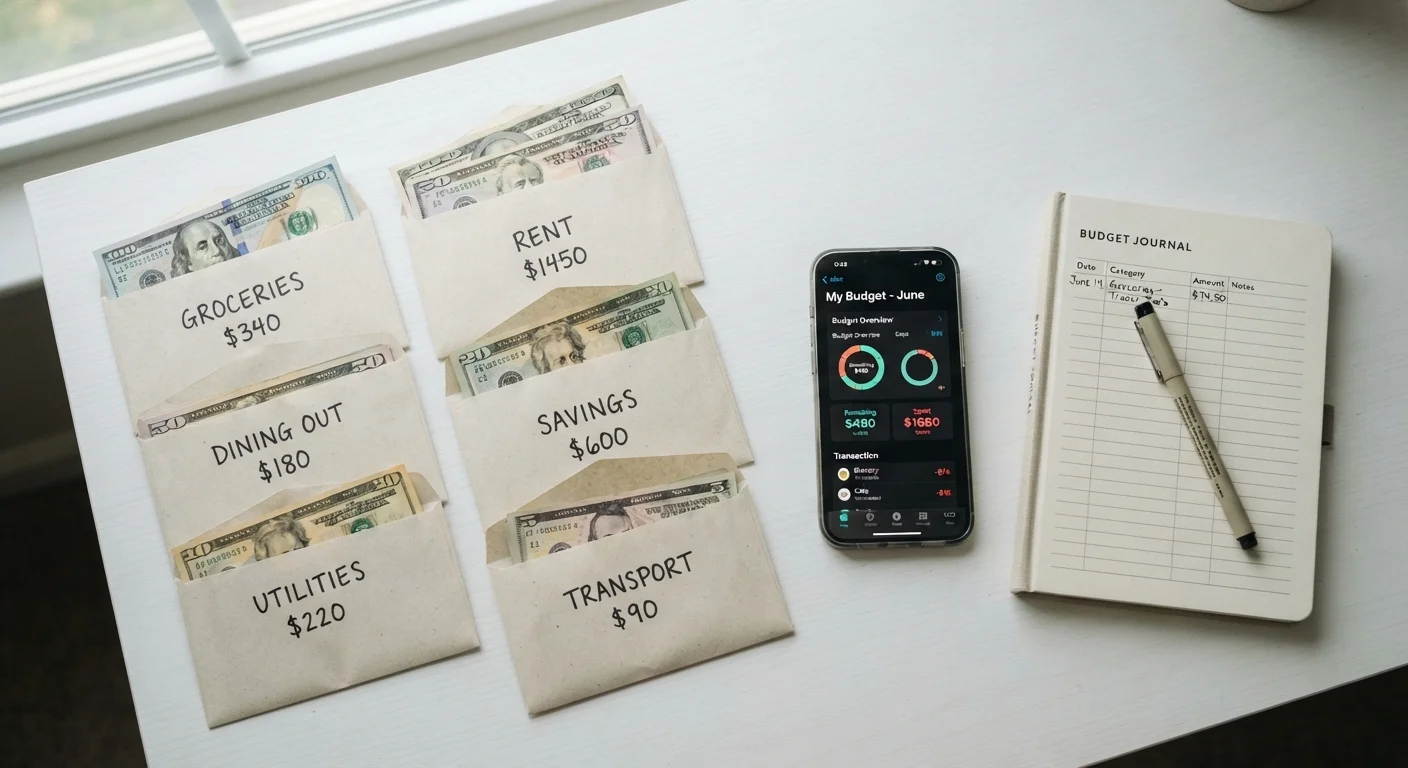
Photo: CoralScripts.com | Explore, Discover, Engage editorial
—— In This Article
Key Takeaways
- Envelope budgeting uses physical cash divided into spending categories, creating a tangible spending limit.
- Digital trackers automate transaction logging but require consistent review to drive real behavior change.
- Your payment habits - cash vs. card - are often the deciding factor between the two methods.
- Hybrid approaches combining both systems work well for people with mixed spending patterns.
- Neither method guarantees results; consistent engagement with your budget matters more than the tool.
How Each System Works
Envelope budgeting is a cash-allocation method with roots stretching back decades. At the start of each pay period, you withdraw your discretionary income in cash and divide it into labeled envelopes - one for groceries, one for dining out, one for entertainment, and so on. When an envelope is empty, spending in that category stops until next period. There's no app required, no syncing, no subscription: the physical limit is the budget.
Digital spending trackers - available as standalone apps or features within broader personal finance platforms - work differently. You link your bank accounts and credit cards, and the software automatically categorizes transactions as they occur. Rather than restricting spending in advance, trackers reveal where money went after the fact, surfacing patterns you might otherwise miss.
If you're new to structured budgeting altogether, start with the fundamentals before committing to either method - understanding core concepts will help you apply any system more effectively.
Strengths and Limitations of Each Approach
The envelope method's greatest strength is its psychological friction. Handing over physical cash registers as a real cost in a way that tapping a card often doesn't. Research in behavioral economics consistently shows that people tend to spend less when using cash - sometimes called the "pain of paying." The system also requires zero technology, which makes it highly accessible and immune to app outages or subscription lapses.
Its main limitation is practical: most people no longer operate in a cash-only world. Online purchases, recurring subscriptions, and digital bill payments simply can't be stuffed into an envelope. Managing a largely card-based lifestyle through a cash system demands workarounds that add friction without always adding clarity.
Digital trackers excel where envelopes fall short. They handle card and bank transactions automatically, generate spending reports, and can alert you when you approach a category limit. That said, automation is only useful if you act on it. A tracker you check once a month becomes a financial diary rather than a spending control tool. And because money doesn't physically leave your hands, overspending a digital "category" carries none of the immediate consequence an empty envelope does.
| Envelope Budgeting | Digital Spending Trackers | |
|---|---|---|
| Setup effort | Manual cash withdrawal and labeling | Account linking, usually automated |
| Best payment type | Cash transactions | Card and digital payments |
| Spending control mechanism | Physical limit - envelope empties | Alerts and category caps after the fact |
| Automation level | None - fully manual | High - transactions auto-categorized |
| Behavioral friction | High - tangible cost of spending | Low - no physical consequence |
| Data and reporting | None built-in | Charts, trends, and history available |
| Technology required | None | Smartphone or computer |
For a structured look at other budgeting frameworks that pair well with either system, see percentage-based budgeting frameworks as a complementary planning layer.
Choosing Based on Your Spending Habits
The most reliable guide to choosing between these two systems is an honest look at how you actually spend money - not how you intend to spend it.
- Primarily cash spender: Envelope budgeting maps directly onto your transactions. Categories and limits are easy to maintain.
- Primarily card or digital spender: A digital tracker handles the transaction volume without requiring a parallel cash system.
- Impulse spender: The physical constraint of envelopes is often more effective than a digital warning that appears after the fact.
- Data-driven planner: Trackers generate the month-over-month trend data that makes retrospective analysis possible - useful for spotting budget leaks.
Try a Hybrid Approach First
If you're unsure which system suits you, start by using envelopes for two or three discretionary categories while letting a tracker handle everything else. After one full month, you'll have concrete data on where you overspend and which format felt more intuitive. That experience will guide a more informed long-term choice than picking a method in theory.
Don't overlook irregular expenses when setting up either system. Annual fees, car maintenance, and seasonal costs regularly derail budgets that only account for recurring monthly outflows. Our guide on spending categories most budgets forget addresses this gap directly.
A hybrid approach - using envelopes for high-risk discretionary categories like dining and entertainment, and a tracker for fixed expenses and subscriptions - can capture the strengths of both systems without demanding a full lifestyle change.
Making Either System Stick
The method matters far less than the consistency you bring to it. Behavioral research on financial habits suggests that regular, scheduled engagement with your budget - not the tool itself - is the strongest predictor of whether a system works long-term.
For envelope users, that means replenishing envelopes on the same day each pay period and resisting the urge to borrow between categories without a deliberate decision. For tracker users, it means scheduling a weekly ten-minute review rather than waiting for a monthly summary that arrives too late to change behavior. A structured monthly audit can help either system users identify drift early and recalibrate before it compounds.
Whichever approach you choose, it sits within a broader financial picture. Your budgeting method shapes day-to-day spending, but longer-range questions - like how much to hold in reserve versus put to work - require separate consideration. For context on that balance, where your next dollar should go is a useful companion read.
This article is for general informational and educational purposes only and does not constitute personalized financial advice. Consult a qualified financial professional regarding decisions specific to your circumstances.

Money Matters Editorial Team
Money Matters Editorial Team is the collective byline for our editorial team and contributor network. Articles published under this byline or an editorial pen name are researched, written, and reviewed according to our editorial standards for clarity, consistency, and independence before publication.
View author profile