
Cash Flow Budgeting: Matching Money In to Money Out by Timing
A budget that ignores when money arrives and when bills land can still leave you short. Learn how cash flow timing changes the way you plan.
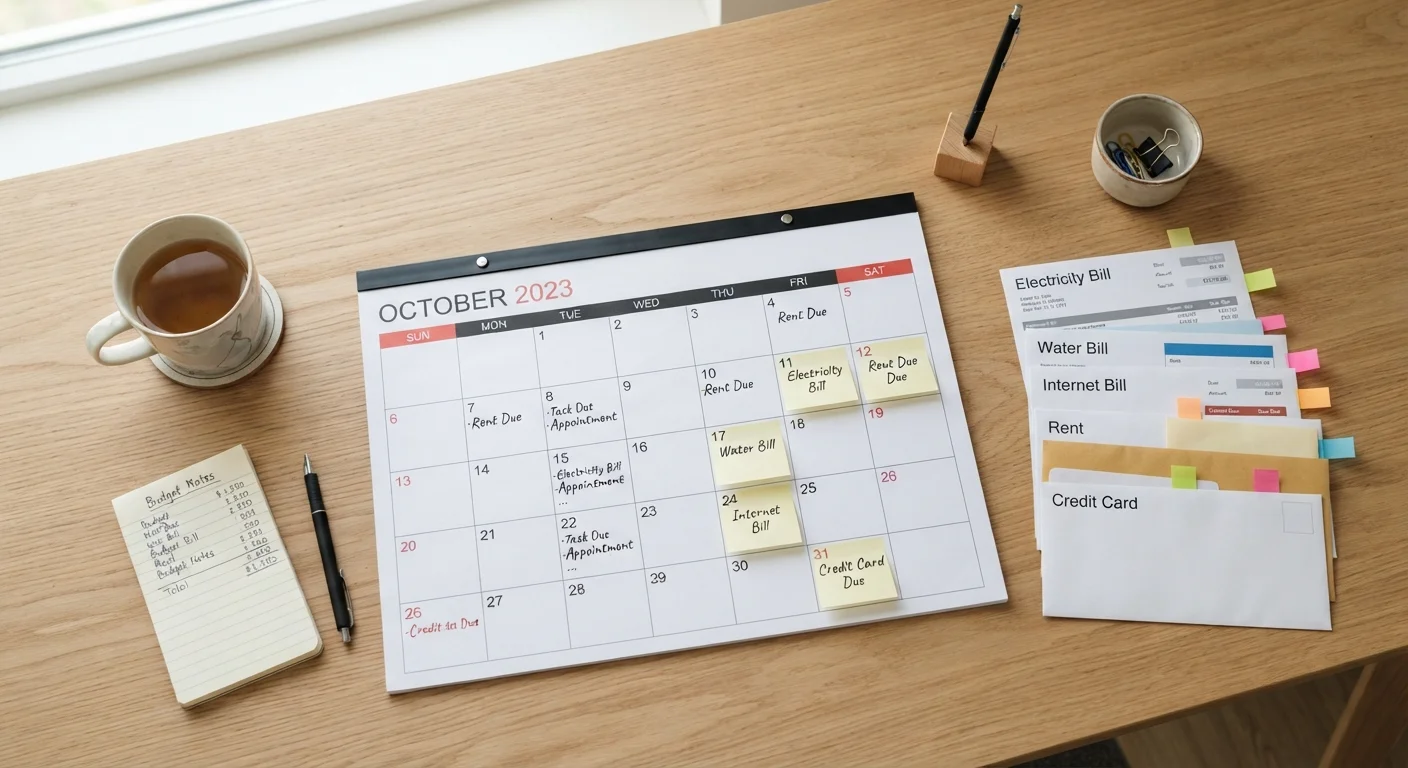
Photo: CoralScripts.com | Explore, Discover, Engage editorial
—— In This Article
Key Takeaways
- A balanced monthly budget can still produce overdrafts if income and bills don't align by date.
- Cash flow budgeting maps money by when it arrives and when it leaves, not just totals.
- Weekly or biweekly cash flow windows reveal shortfalls that monthly snapshots hide.
- Irregular income earners benefit most from aligning pay dates with major bill due dates.
- A small cash buffer eliminates most timing gaps without requiring major income changes.
Why Timing Is the Hidden Variable in Every Budget
Most people approach budgeting as an arithmetic problem: subtract what you spend from what you earn, and if the result is positive, you're fine. In theory, this works. In practice, money doesn't move in tidy, synchronized flows.
Your rent may be due on the 1st, your car insurance auto-drafts on the 5th, and your paycheck might not land until the 7th. Even if your monthly income comfortably exceeds your monthly expenses, that three-to-seven day gap can trigger an overdraft, a late fee, or a stressful scramble. This is a timing problem, not an income problem - and a standard monthly budget won't catch it.
Cash flow budgeting solves this by treating when money moves as equally important as how much moves. If you're just getting started with the fundamentals, personal budgeting from the ground up provides the foundational context this method builds on.
54%
Americans living paycheck to paycheck
According to a 2023 LendingClub report, more than half of U.S. consumers report spending essentially all of their income each month, leaving little buffer for timing gaps.
$35
Typical bank overdraft fee
The Consumer Financial Protection Bureau has reported average overdraft fees in the range of $30-$35 per transaction - costs that cash flow timing awareness can help avoid.
How to Build a Cash Flow Map
The mechanics are straightforward. Take a blank calendar - digital or paper - and mark every expected income deposit with its date and amount. Then add every known expense with its actual due date, not just the month it belongs to. What you're building is a visual timeline of money flowing in and out.
Look for any period where outflows cluster before the next inflow arrives. These gaps are your vulnerability points. Common culprits include:
- Rent or mortgage due at the start of the month before a mid-month paycheck
- Auto-drafted subscriptions timed to a date you didn't choose
- Quarterly or annual bills - insurance premiums, vehicle registration - that arrive irregularly
Many of these are negotiable. Utility companies, insurance providers, and even some landlords will accommodate due-date changes if you ask. Shifting a single large bill by a week can eliminate an entire cash flow gap. For a detailed look at the irregular expenses most budgets miss entirely, see spending categories most budgets forget to include.
Call Before You Reschedule
Before shifting a bill's due date, contact the provider directly and confirm the change in writing. Some companies charge a fee or reset your billing cycle in a way that creates a short-term double payment. Knowing this in advance lets you plan around it rather than be caught off guard.
Cash Flow Budgeting for Variable and Irregular Income
Salaried employees have it relatively straightforward - their income dates are predictable. Freelancers, contractors, gig workers, and small business owners face a harder challenge: not only do payment amounts vary, but the arrival dates are often unpredictable.
For irregular earners, cash flow budgeting shifts from a scheduling exercise to a buffer-building strategy. The goal is to maintain a standing reserve - sometimes called a cash flow buffer or income-smoothing account - that absorbs the gap between when a client pays and when your bills are due. Rather than budgeting each month from scratch, you pay yourself a consistent weekly or biweekly amount from this buffer, treating it like a self-administered paycheck.
Tracking your income when it changes month to month explores this strategy in detail, including how to set the right buffer size based on your typical income volatility.
Making Cash Flow Budgeting a Consistent Habit
A cash flow map created once and never revisited quickly becomes inaccurate. Income dates shift, new subscriptions appear, and one-off expenses emerge. The practice becomes genuinely useful when it's reviewed regularly - weekly for most people, or at minimum before each paycheck arrives.
This doesn't require sophisticated software. A simple spreadsheet with two columns - money in and money out, both dated - is enough. What matters is the discipline of updating it and acting on what it shows before a problem occurs rather than after.
Habits that separate consistent budgeters from occasional ones covers the behavioral side of staying consistent, which is ultimately what determines whether any budgeting method delivers results.
Cash flow budgeting doesn't require a higher income or a perfect spending record. It simply requires attention to timing - and that's a skill anyone can develop.
This article is for general informational and educational purposes only and does not constitute personalized financial advice. Consider consulting a qualified financial professional for guidance specific to your circumstances.
Frequently Asked Questions

Money Matters Editorial Team
Money Matters Editorial Team is the collective byline for our editorial team and contributor network. Articles published under this byline or an editorial pen name are researched, written, and reviewed according to our editorial standards for clarity, consistency, and independence before publication.
View author profile