
Building a Team Culture Across Time Zones
Distributed teams face unique cultural challenges. Practical approaches for fostering cohesion when colleagues rarely share the same clock.
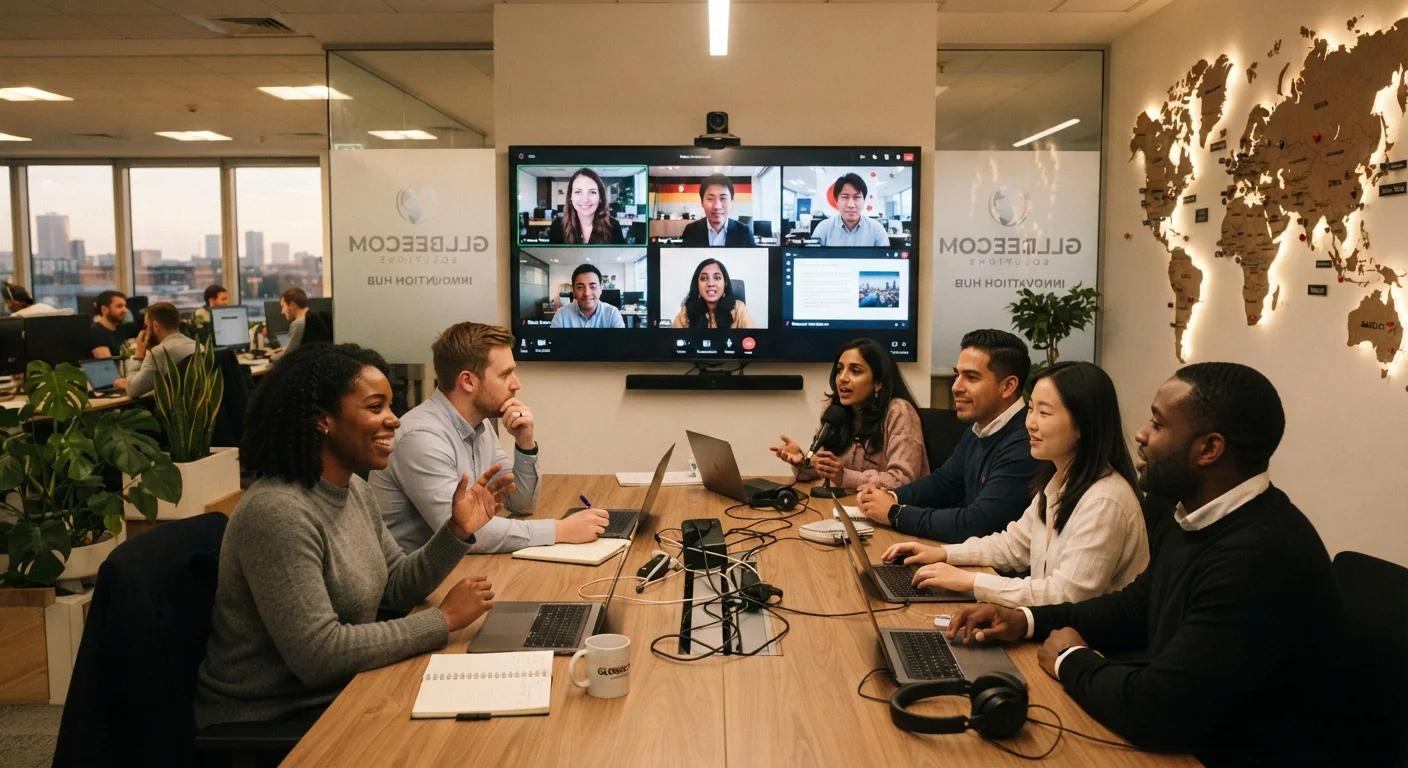
Photo: CoralScripts.com | Explore, Discover, Engage editorial
—— In This Article
Key Takeaways
- Asynchronous communication norms are the foundation of any effective cross-time-zone culture.
- Deliberately scheduled overlap hours prevent isolation without demanding constant availability.
- Psychological safety matters even more in distributed settings where informal trust-building is limited.
- Consistent rituals and documentation practices replace the cultural glue of shared physical space.
- Managers must adapt their approach to be more intentional, visible, and equitable across locations.
The Cultural Challenge Distributed Teams Actually Face
Building team culture is hard enough when everyone shares an office. Spread colleagues across multiple time zones — New York, London, Singapore — and the informal mechanisms that normally generate cohesion simply stop working. Hallway conversations, spontaneous lunches, and overheard context all disappear. What remains is the work itself, mediated through screens and often delayed by hours.
The result, when organizations don't compensate deliberately, is what researchers describe as proximity bias combined with an information asymmetry problem: employees closer to headquarters get more visibility, more informal mentoring, and more organizational context. Those further away feel transactional rather than connected. Turnover typically follows.
The good news is that distributed culture isn't impossible — it's just different. Teams that succeed tend to share a common trait: they treat culture as an explicit operational priority, not a byproduct of proximity. That shift in framing changes almost everything. See how effective remote managers approach this challenge for a complementary perspective on leadership in distributed settings.
Core Practices for Sustaining Culture at a Distance
The practices below aren't aspirational ideals — they reflect patterns observed in distributed teams that demonstrably maintain cohesion, engagement, and shared identity over time.
Establish explicit asynchronous communication norms before adding any new tools.
Without agreed norms, asynchronous channels become chaotic and create anxiety around response expectations. Clear protocols — what gets documented where, expected response windows, when to escalate — reduce cognitive load and make working hours genuinely flexible.
Protect a weekly overlap window that every team member can attend.
Synchronous time is finite and valuable for distributed teams. Protecting a single recurring window — even 60 minutes — where all time zones can participate reinforces shared identity and enables real-time relationship-building that async channels cannot replicate.
Document decisions visibly and accessibly, not just outcomes.
In co-located teams, the reasoning behind decisions travels informally. In distributed teams, it doesn't. When colleagues in other time zones can't access the 'why,' they're left implementing directions they don't understand, which erodes both quality and trust.
Create structured opportunities for non-work connection.
Relationships that form only around tasks are fragile. Brief, recurring rituals — virtual coffee pairings, non-work Slack channels, optional social calls — give distributed colleagues a chance to know each other as people, which is the substrate on which trust is built.
Audit meeting equity regularly and correct imbalances.
Unequal participation patterns compound over time: colleagues who consistently present, facilitate, or get air time become more visible and more influential. Distributed teams should periodically review who speaks, who presents, and who is systematically absent from influential conversations.
It's also worth noting that adding more communication tools rarely solves cultural fragmentation on its own. Digital overload is a real risk when teams layer platform upon platform without clear norms for each.
Quick Actions Teams Can Take This Week
Culture change doesn't always require a major initiative. Some of the most durable improvements start with small, consistent actions that signal respect for distributed colleagues' time and context.
For teams onboarding new remote hires, these habits become especially critical. Setting up a new remote employee for success requires embedding cultural practices from day one, not retrofitting them later.
The Deeper Work: Psychological Safety Across Distance
Technical practices and meeting rituals only go so far. Sustained cross-time-zone culture ultimately depends on whether team members feel safe to speak up, ask questions, and admit uncertainty — regardless of where they sit on the map.
“The biggest challenge in distributed teams isn't technology or time zones — it's the invisible erosion of the trust and context that people in the same room take for granted. You have to rebuild that deliberately, or it simply won't exist.”
— Tsedal Neeley, Professor at Harvard Business School and author on remote work and global teams
In distributed environments, psychological safety is harder to cultivate because the informal cues that normally signal it — body language, tone, shared laughter — are compressed or absent in asynchronous text. Managers need to model vulnerability explicitly: acknowledging mistakes in writing, inviting dissent in documented channels, and ensuring that colleagues in minority time zones aren't systematically sidelined from key decisions.
Teams that invest in this foundation don't just retain employees more effectively — they tend to produce better work. Diverse time zones, when genuinely included, bring different market perspectives, longer productive coverage windows, and a natural check on groupthink. The cultural infrastructure required to realize that value is exactly what the practices above are designed to build.
20%
Remote worker loneliness rate
Buffer's annual State of Remote Work survey has consistently found that roughly one in five remote workers cites loneliness as their biggest workplace struggle.
4.7x
Higher likelihood of strong performance in psychologically safe teams
Google's Project Aristotle research identified psychological safety as the single strongest predictor of high-performing teams across its study group.

Work & Business Editorial Team
Work & Business Editorial Team is the collective byline for our editorial team and contributor network. Articles published under this byline or an editorial pen name are researched, written, and reviewed according to our editorial standards for clarity, consistency, and independence before publication.
View author profile