
Why Travelers Underestimate Layovers — and How Transit Rules Actually Work
Transit visas, airside vs. landside connections, and minimum connection times are misunderstood more often than you'd expect. Here's how to read them correctly.
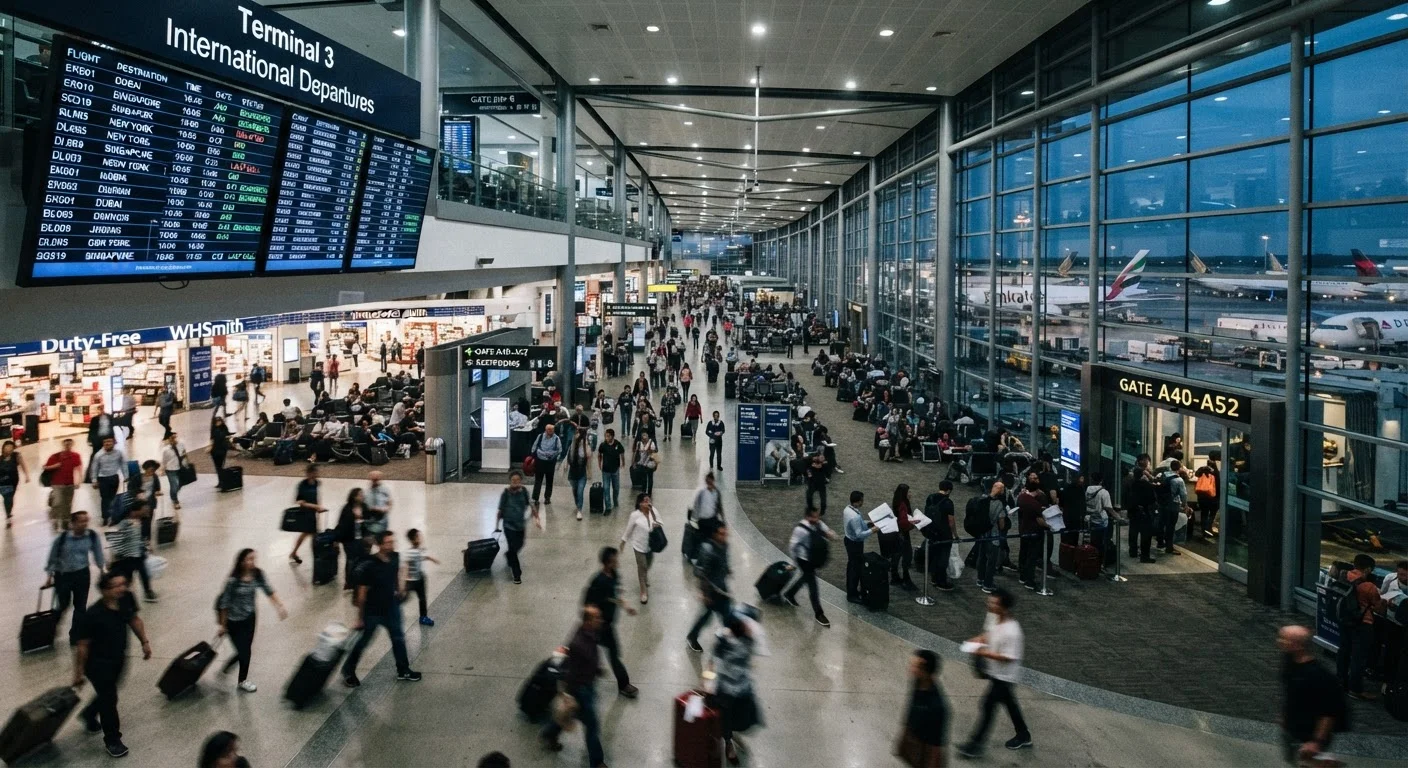
Photo: CoralScripts.com | Explore, Discover, Engage editorial
—— In This Article
Key Takeaways
- Transit visa requirements depend on your passport, not your destination — the connecting country's rules apply.
- Airside and landside transits are legally distinct: exiting the secure zone may trigger an entry requirement.
- Minimum connection times set by airlines are operational benchmarks, not personal safety margins.
- A missed connection caused by a short layover on separate tickets leaves you responsible for rebooking costs.
- Always verify transit rules directly with the connecting country's embassy or official immigration source.
The Hidden Complexity of the In-Between Flight
Most travelers focus their planning energy on the destination. The layover gets treated as dead time — an inconvenience to minimize rather than a step requiring its own preparation. That framing is where problems begin.
International connections involve at least three distinct rule sets: the entry and transit requirements of the connecting country, the operational logistics of the airport itself, and the contractual terms of however you booked your tickets. Getting any one of these wrong can mean a denied boarding, a missed flight, or an unexpected overnight in a city you never intended to visit.
The mistakes below are not obscure edge cases. They show up repeatedly across traveler forums, airline complaint logs, and border-agency reports — often from experienced travelers who simply assumed the layover would take care of itself. See also our guide to how entry requirements work for a broader look at where transit rules fit within international travel documentation.
Assuming no visa is needed for a layover because you're 'just passing through.'
Why it happens: Travelers conflate their destination's entry rules with the connecting country's transit rules. The two are governed independently.
Confusing airside transit with landside entry and not accounting for baggage reclaim.
Why it happens: Many travelers don't know their airport's layout in advance, and assume they will stay in a sterile international zone throughout.
Treating the minimum connection time (MCT) as a comfortable personal buffer.
Why it happens: MCTs are presented during booking as if they represent a reasonable minimum; travelers interpret them as a margin of safety rather than an operational floor.
Booking connecting flights on separate tickets without understanding the consequences of a missed connection.
Why it happens: Separate tickets sometimes offer lower fares, and travelers assume the airline will accommodate them the same way it would on a single itinerary.
Not checking whether a transit visa requires advance application rather than on-arrival approval.
Why it happens: Travelers familiar with on-arrival tourist visas assume transit authorization works the same way.
Reading Layover Rules Correctly Before You Book
The first step is recognizing that transit rules are issued by governments, not airlines. An airline can tell you whether your itinerary is ticketable; it cannot tell you whether your passport grants you visa-free transit in the connecting country. Those are different questions answered by different sources.
Transit Rules Change Without Broad Announcement
Governments can update transit visa policies, reciprocal agreements, and airside transit permissions with limited public notice. A routing that was visa-free for US passport holders one year may require advance authorization the next. Always verify directly with the connecting country's official immigration source within a few weeks of your travel date, not solely at the time of booking.
For US passport holders, many major hub countries — including those in the Schengen Area, the UK, Canada, and key Asian hubs — offer visa-free transit under specific conditions. But those conditions matter: your onward destination, your flight timing, whether you need to collect and re-check baggage, and even your prior travel history can all affect your eligibility. Some countries apply different transit rules depending on which nationalities you hold, regardless of which passport you present at the gate.
The authoritative check is always the official immigration or consular website of the country where you are connecting, supplemented by the IATA Travel Centre database that airlines themselves use. Neither source guarantees outcome, and rules change — which means verifying close to your departure date is as important as verifying when you book. If your itinerary involves any complexity, structuring your overall schedule with buffer time is a practical complement to transit preparation.
40%+
Share of missed connections tied to tight layovers
Industry analyses of irregular operations consistently show that short connection times — particularly under 60 minutes at large hub airports — are a leading contributing factor in missed connections.
100+
Countries with distinct transit visa categories
The IATA Travel Information Manual documents over 100 countries that maintain separate transit visa classifications, each with nationality-specific conditions that differ from standard tourist entry rules.
Understanding the airside/landside distinction is equally critical. Airside transit means remaining within the international secure zone between flights — you never formally enter the country. Landside transit means passing through immigration and entering the country, even briefly. If your connecting airport requires you to collect checked baggage and re-check it — a common scenario on separate tickets or on certain itineraries — you will almost certainly be going landside, which triggers entry requirements rather than transit ones. The physical layout of specific airports can force this even when travelers expect to remain airside.
Airline Check-In Staff Apply the Rules — Not Exceptions
At departure, airline check-in agents are required to verify that you hold the correct documentation for every country on your itinerary, including transit stops. If you cannot demonstrate valid transit authorization, you will be denied boarding — and the airline is legally liable if it carries you to a country where you are inadmissible. No agent has the authority to waive this check on your behalf, regardless of the circumstances you describe.

Travel & Places Editorial Team
Travel & Places Editorial Team is the collective byline for our editorial team and contributor network. Articles published under this byline or an editorial pen name are researched, written, and reviewed according to our editorial standards for clarity, consistency, and independence before publication.
View author profile