
Functional, Chronological, and Hybrid Résumés: Which Structure Serves Your Career Story
Each résumé format suits a different career situation. Understand the trade-offs before deciding which structure tells your story most effectively.
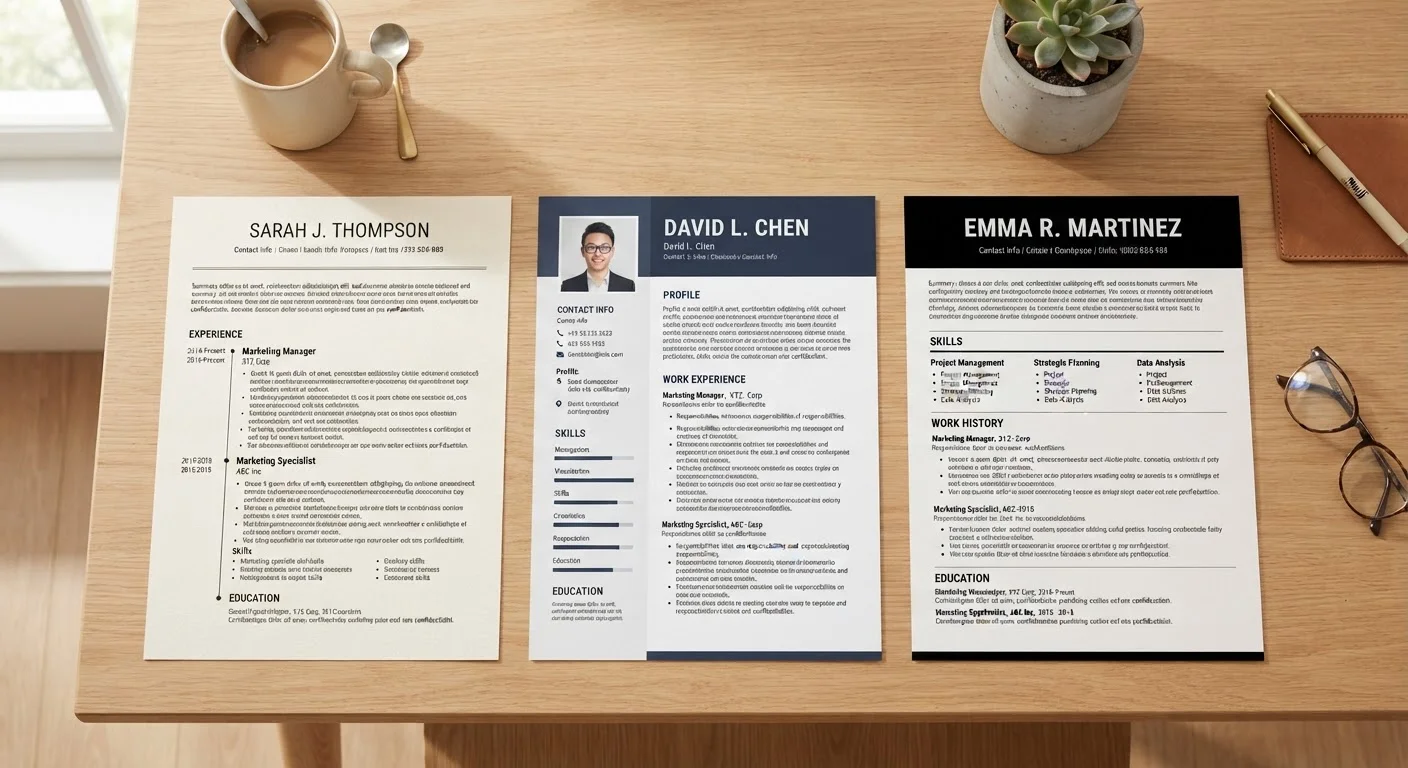
Photo: CoralScripts.com | Explore, Discover, Engage editorial
—— In This Article
Key Takeaways
- Chronological résumés work best for candidates with steady, relevant work histories in the same field.
- Functional résumés emphasize skills over dates, but many recruiters and ATS systems view them skeptically.
- Hybrid résumés combine both structures and suit most modern job seekers, including career changers.
- The format you choose should serve the reader - a hiring manager or applicant tracking system - not obscure your background.
- No single format fits every situation; your career stage and target role should drive the decision.
Why Format Matters More Than You Might Think
A résumé is not just a list of jobs - it's a structured argument for why you're the right person for a role. The format you choose shapes how quickly a hiring manager can verify your qualifications, how well your document survives applicant tracking system (ATS) parsing, and whether your career narrative feels coherent or confusing.
This matters especially in a hiring landscape where skills-based hiring is gaining ground, and where career paths are rarely as linear as they once were. The three dominant résumé structures - chronological, functional, and hybrid - each make a different implicit promise to the reader. Understanding those promises helps you decide which one tells your story most honestly and effectively.
The Three Formats at a Glance
Before diving into trade-offs, it helps to understand what each format actually looks like in practice.
- Chronological: Work experience listed in reverse order (most recent first), with job titles, employers, dates, and bullet-point accomplishments under each role. Education and skills sections typically follow.
- Functional: Skills or competency categories are listed first and expanded with bullet points drawn from various roles. Work history is minimal - often just a brief list of employers and dates near the bottom.
- Hybrid (also called combination): Opens with a skills or summary section, then presents a full reverse-chronological work history. It attempts to capture the strengths of both approaches.
| Chronological | Functional | Hybrid | |
|---|---|---|---|
| Primary focus | Work history & progression | Skills & competencies | Skills summary + full history |
| ATS compatibility | High | Low to moderate | High |
| Recruiter familiarity | Very high - expected default | Lower - viewed with some skepticism | High - increasingly common |
| Best for employment gaps | Poor - gaps are highly visible | Moderate - gaps less prominent | Good - summary frames context |
| Best for career changers | Weak - titles may not align | Moderate - skills-forward | Strong - bridges old and new |
| Typical length | 1-2 pages | 1 page | 2 pages |
These distinctions aren't cosmetic. They determine what a recruiter sees in their first 10-15 seconds with your document - and what an ATS extracts during automated screening.
When Each Format Works - and When It Doesn't
Chronological remains the default expectation in most industries. Recruiters are trained to scan it quickly, and ATS systems are built to parse it reliably. If your work history is consistent, progressively responsible, and directly relevant to the role you're targeting, this format is hard to beat. It signals stability and transparency.
Where it struggles: employment gaps, frequent job changes, or pivoting to a new field. Under a strict chronological format, these become visually prominent in ways that may invite premature dismissal - even when there are entirely legitimate explanations.
Functional résumés arose as a workaround for exactly those situations, but they've developed a complicated reputation. Many recruiters report viewing them with suspicion, reading the skills-first structure as an attempt to hide something. More practically, many ATS platforms have difficulty correctly categorizing the unanchored bullet points in a functional layout, which can result in poor keyword matching even when the right skills are present.
Functional Formats and ATS Risks
If you're applying through an online portal - which most large employers require - be aware that functional résumés can trip up automated screening systems. ATS platforms are typically optimized to extract data from chronological structures. Floating bullet points that aren't anchored to specific employers or dates may be ignored or miscategorized, reducing your document's keyword score even when your actual experience is relevant. If you feel a functional layout is necessary, consider whether a hybrid might achieve the same goal with less risk.
Hybrid formats address both concerns. By opening with a curated skills summary or professional profile, they give recruiters immediate signal about your core competencies. By maintaining a full work history, they preserve the transparency that hiring managers expect. This makes hybrids particularly well-suited to career changers, re-entrants, and anyone whose transferable skills don't map neatly onto their job titles. The trade-off is length - a hybrid done well typically runs slightly longer than a pure chronological document.
Tailoring Your Choice to Your Situation
Rather than picking a format based on aesthetic preference, start with your career situation and work backward. Consider three questions:
- How closely does my recent experience match the target role? Strong alignment favors chronological. Significant divergence favors hybrid.
- Are there gaps or transitions that a pure timeline would misrepresent? If yes, a hybrid's summary section gives you space to frame them on your own terms.
- What does this industry or role type expect? Traditional industries - law, finance, academia, government - tend to expect chronological formats. Creative, tech, and consulting fields are generally more receptive to hybrid layouts.
It's also worth considering where the tension between specialization and breadth sits in your own background. Deep specialists often benefit from the direct signal of a chronological format, while generalists may find that a hybrid's opening skills section better contextualizes why their varied experience is an asset rather than a liability.
Customize for Each Application
Even once you've chosen a base format, treat it as a template rather than a fixed document. Adjust the skills you highlight, the accomplishments you lead with, and the language you use to mirror the job description's terminology. This isn't about misrepresenting your background - it's about speaking directly to what the specific role requires, which makes your résumé easier to evaluate and more likely to clear automated filters.
Whatever format you choose, the underlying principle holds: the résumé exists to open a conversation, not close one. Its job is to make a clear, credible case that earns you an interview - not to tell every story from your career at once.
This article is for general informational and educational purposes only. Career outcomes vary based on individual circumstances, industry, and employer practices.

People & Communities Editorial Team
People & Communities Editorial Team is the collective byline for our editorial team and contributor network. Articles published under this byline or an editorial pen name are researched, written, and reviewed according to our editorial standards for clarity, consistency, and independence before publication.
View author profile