
Thyroid Disorders at a Glance: Hypothyroidism, Hyperthyroidism, and Beyond
A structured reference covering the main thyroid conditions, their symptoms, and how they differ — useful for anyone seeking to understand thyroid health.
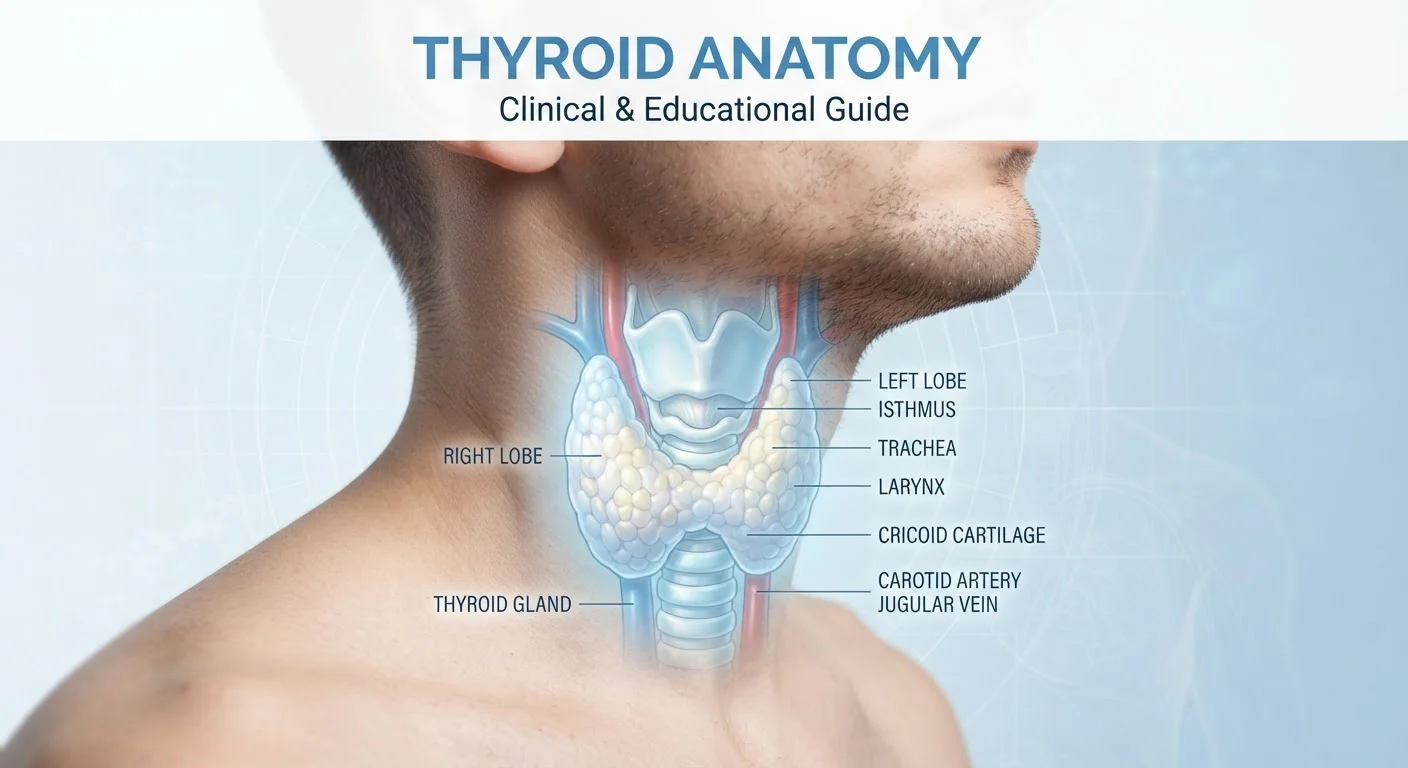
Photo: CoralScripts.com | Explore, Discover, Engage editorial
—— In This Article
What the Thyroid Does - and Why It Matters
The thyroid is a small, butterfly-shaped gland located in the front of the neck. Despite its modest size, it produces hormones - primarily thyroxine (T4) and triiodothyronine (T3) - that regulate metabolism, heart rate, body temperature, and energy use in nearly every cell of the body.
When the thyroid functions normally, hormone output is governed by a feedback loop involving the pituitary gland and its thyroid-stimulating hormone (TSH). Disruptions to this system, whether from autoimmune activity, iodine imbalances, nodules, or inflammation, can result in a spectrum of conditions with overlapping yet distinct presentations.
Understanding the difference between these conditions helps patients and caregivers ask better questions and engage more productively with healthcare providers. This article is for general informational purposes only and is not a substitute for professional medical advice.
Hypothyroidism: When the Thyroid Underperforms
Hypothyroidism occurs when the thyroid produces insufficient hormone to meet the body's demands. The most common cause in the United States is Hashimoto's thyroiditis, an autoimmune condition in which the immune system attacks thyroid tissue over time.
Common symptoms include persistent fatigue, weight gain, cold intolerance, constipation, dry skin, slow heart rate, and depression. Because these symptoms develop gradually and overlap with many other conditions, diagnosis often relies on blood tests measuring TSH and free T4 levels.
TSH (Thyroid-Stimulating Hormone)
A hormone released by the pituitary gland that signals the thyroid to produce T3 and T4. Elevated TSH typically indicates hypothyroidism; suppressed TSH suggests hyperthyroidism.
T3 and T4
The two primary hormones produced by the thyroid gland. T4 (thyroxine) is the storage form, while T3 (triiodothyronine) is the more biologically active hormone used by cells.
Hashimoto's Thyroiditis
An autoimmune condition in which the body's immune system gradually damages thyroid tissue, reducing its ability to produce sufficient hormones and leading to hypothyroidism.
Graves' Disease
An autoimmune disorder that causes the thyroid to overproduce hormones, resulting in hyperthyroidism. It is sometimes accompanied by eye changes known as Graves' ophthalmopathy.
Goiter
An abnormal enlargement of the thyroid gland, visible or palpable at the neck. It can arise from various causes including iodine deficiency, autoimmune disease, or nodule development.
Thyroid Nodule
A discrete lump or growth within the thyroid gland. Most are benign and found incidentally, but evaluation is recommended to rule out malignancy.
Left unmanaged, hypothyroidism can affect cardiovascular health, fertility, and mental well-being. It is significantly more prevalent in women and increases in frequency with age. Anyone experiencing these symptoms persistently should speak with a qualified clinician rather than self-diagnose.
Hyperthyroidism and Other Thyroid Conditions
Hyperthyroidism is the opposite state: the thyroid produces excess hormone, accelerating body processes. Graves' disease, another autoimmune condition, is its leading cause. Symptoms can include unexplained weight loss, rapid or irregular heartbeat, heat intolerance, anxiety, tremors, and increased sweating.
It is worth noting that thyroid-related anxiety shares surface features with primary anxiety disorders. For a broader look at how anxiety manifests across conditions, see our overview of anxiety disorders.
Beyond the two primary disorders, several other thyroid conditions deserve attention:
- Thyroid nodules: Lumps within the gland that are common and usually benign, though some require evaluation for malignancy.
- Thyroiditis: Inflammation of the gland, which can be temporary (as in postpartum thyroiditis) or chronic.
- Thyroid cancer: Relatively uncommon and generally carries a favorable prognosis when detected early; treatment varies by type and stage.
- Goiter: Enlargement of the thyroid that can result from iodine deficiency, autoimmune disease, or nodule growth.
60%
Thyroid disease cases that go undiagnosed
According to the American Thyroid Association, an estimated 60% of people with thyroid disease are unaware of their condition.
5-8x
Higher thyroid disorder prevalence in women vs. men
Women are significantly more likely than men to develop thyroid disorders, particularly autoimmune types like Hashimoto's and Graves' disease.
~43,700
New thyroid cancer diagnoses annually in the US
The American Cancer Society estimates tens of thousands of new thyroid cancer cases are identified each year, though survival rates are generally high with early detection.
Because hyperthyroidism symptoms - including rapid heart rate and anxiety - can mimic other conditions, accurate diagnosis depends on laboratory testing, sometimes supplemented by imaging or radioactive iodine uptake studies. Always consult a healthcare professional for evaluation and management guidance.
This article is for informational purposes only and does not constitute medical advice. Consult a qualified healthcare provider for diagnosis, treatment, or questions about any health condition.

Health & Wellness Editorial Team
Health & Wellness Editorial Team is the collective byline for our editorial team and contributor network. Articles published under this byline or an editorial pen name are researched, written, and reviewed according to our editorial standards for clarity, consistency, and independence before publication.
View author profile