
Osteoarthritis vs. Rheumatoid Arthritis: The Same Name, Very Different Diseases
Both affect the joints, but their causes and progressions differ significantly. Learn what sets osteoarthritis and rheumatoid arthritis apart.
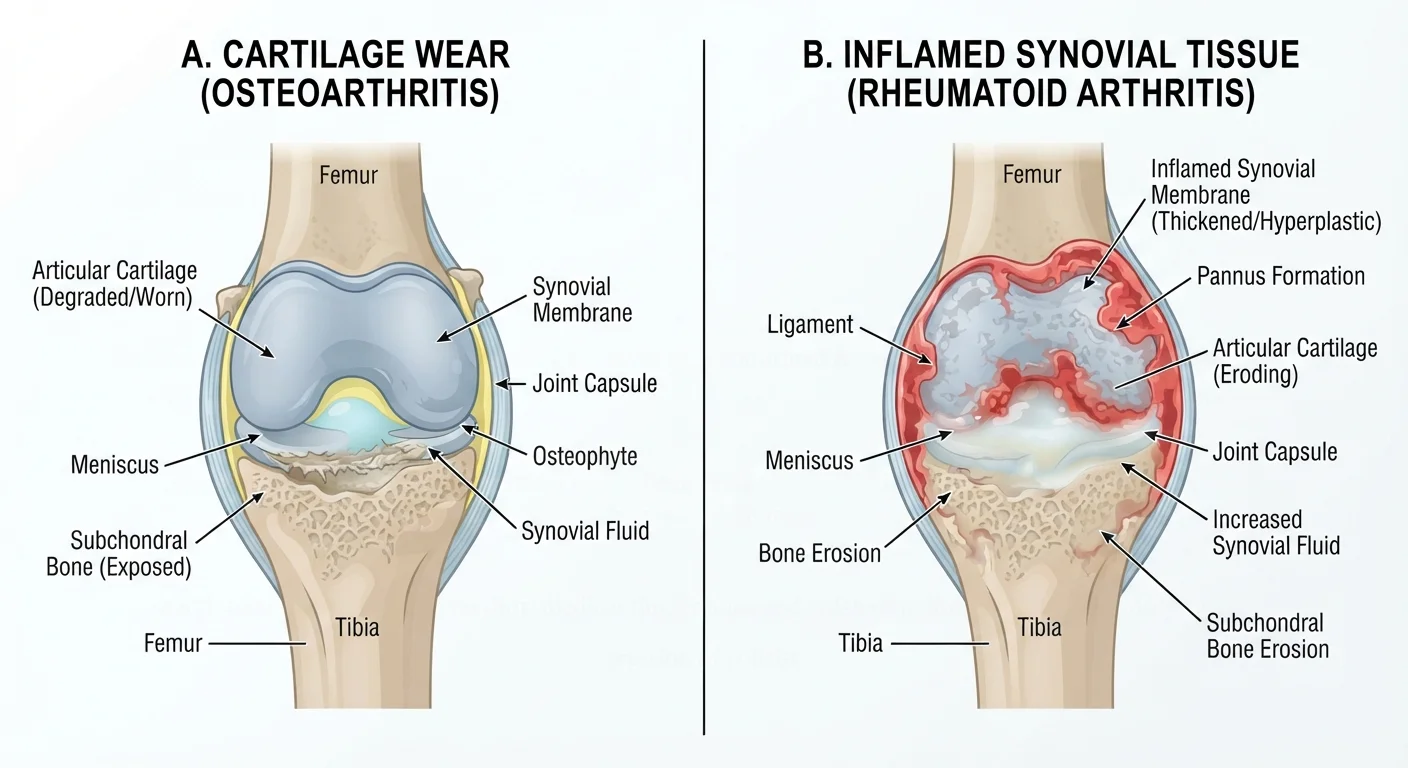
Photo: CoralScripts.com | Explore, Discover, Engage editorial
—— In This Article
Key Takeaways
- Osteoarthritis is a degenerative condition caused by cartilage breakdown; rheumatoid arthritis is an autoimmune disease.
- Rheumatoid arthritis can affect multiple organ systems, while osteoarthritis is primarily limited to specific joints.
- Morning stiffness lasting more than an hour is a hallmark feature of rheumatoid arthritis, not osteoarthritis.
- Both conditions are manageable, but their treatment approaches differ significantly.
- Early and accurate diagnosis is critical for selecting the right disease management strategy.
Understanding the Root Causes
Despite sharing "arthritis" in their names - a word simply meaning joint inflammation - osteoarthritis (OA) and rheumatoid arthritis (RA) arise from entirely different biological processes.
Osteoarthritis is a degenerative joint disease. Over time, the protective cartilage that cushions the ends of bones gradually wears down. As cartilage thins, bone may begin to rub against bone, causing pain, stiffness, and reduced range of motion. Risk factors include aging, excess body weight, prior joint injury, and repetitive mechanical stress. OA is not primarily an inflammatory disease, though low-grade inflammation can contribute to its progression.
Rheumatoid arthritis, by contrast, is an autoimmune condition. The immune system mistakenly attacks the synovium - the thin membrane lining the joints - triggering chronic inflammation that can damage cartilage, bone, and surrounding tissues over time. RA can also affect the lungs, heart, eyes, and blood vessels, making it a systemic disease rather than a localized joint problem. The precise trigger remains under investigation, but genetic factors and environmental exposures are thought to play a role.
| Osteoarthritis | Rheumatoid Arthritis | |
|---|---|---|
| Underlying cause | Cartilage degeneration and mechanical wear | Autoimmune attack on joint lining |
| Systemic involvement | Primarily localized to joints | Can affect lungs, heart, eyes, and more |
| Joint pattern | Often asymmetrical; weight-bearing joints | Symmetrical; small joints of hands and feet |
| Morning stiffness | Typically under 30 minutes | Often exceeds one hour |
| Blood markers | Usually normal | Elevated RF, anti-CCP, CRP, ESR |
| Primary treatment focus | Symptom relief, function preservation | Disease modification, immune suppression |
| Most commonly affected population | Adults over 50, history of joint injury | Adults 30-60, women more frequently |
Recognizing the Symptoms
Both conditions cause joint pain and stiffness, but the pattern of symptoms provides important diagnostic clues.
In osteoarthritis, pain typically worsens with activity and improves with rest. It tends to develop gradually and affect weight-bearing joints - the knees, hips, lower spine, and hands - often asymmetrically. Morning stiffness, if present, usually resolves within 30 minutes. Bony enlargements called Heberden's nodes may develop at finger joints in some individuals.
In rheumatoid arthritis, joint involvement is typically symmetrical - both wrists or both knees are affected simultaneously. Morning stiffness often lasts an hour or longer, and joints may feel warm and appear visibly swollen. Fatigue, low-grade fever, and a general sense of feeling unwell are common, reflecting the systemic nature of the disease. RA frequently affects the small joints of the hands and feet first.
Track Your Symptom Pattern Before Your Appointment
Keeping a brief journal of when joint pain occurs - whether after activity or upon waking - along with any associated fatigue, swelling, or warmth, gives your physician valuable diagnostic detail. Note which joints are affected and whether both sides of the body are involved. This information can meaningfully shorten the path to an accurate diagnosis.
If symptoms are unclear, a physician may order blood tests - such as rheumatoid factor (RF) or anti-cyclic citrullinated peptide (anti-CCP) antibodies - alongside imaging studies to differentiate between these conditions.
Diagnosis and Who Is Affected
The populations most commonly affected by each condition differ in notable ways. OA is strongly associated with aging; it is one of the most prevalent chronic conditions in adults over 50. RA, while it can occur at any age, most commonly develops between the ages of 30 and 60 and disproportionately affects women at a rate roughly two to three times higher than men, according to data from the National Institute of Arthritis and Musculoskeletal and Skin Diseases.
32.5M
U.S. adults estimated to have osteoarthritis
According to the Centers for Disease Control and Prevention (CDC), osteoarthritis is among the most common chronic conditions in the United States.
1.5M
Americans living with rheumatoid arthritis
The Arthritis Foundation estimates approximately 1.5 million people in the U.S. are affected by rheumatoid arthritis.
2-3×
Higher RA prevalence in women vs. men
The National Institute of Arthritis and Musculoskeletal and Skin Diseases notes women develop rheumatoid arthritis at a significantly higher rate than men.
Diagnosing OA typically relies on clinical history, physical examination, and imaging such as X-rays showing joint space narrowing. RA diagnosis incorporates laboratory markers (RF, anti-CCP, elevated inflammatory markers like CRP and ESR) alongside clinical criteria established by the American College of Rheumatology. Neither condition has a single definitive test, which is why specialist evaluation is important.
Management Approaches
Because OA and RA differ in origin, their management strategies diverge considerably, though some lifestyle principles - maintaining a healthy weight, staying physically active, and protecting joint health - apply broadly.
For osteoarthritis, management typically focuses on symptom relief and preserving joint function. Physical therapy, low-impact exercise, assistive devices, and analgesic medications are commonly used. In advanced cases, joint replacement surgery may be considered.
For rheumatoid arthritis, the primary goal is controlling immune system activity to prevent joint damage and systemic complications. Disease-modifying antirheumatic drugs (DMARDs) - including methotrexate and newer biologic agents - are central to RA treatment. Early intervention is especially important in RA because joint damage can occur rapidly in the initial years of disease. Regular monitoring by a rheumatologist is standard care.
Just as respiratory conditions can be misidentified when symptoms overlap - a challenge explored in our discussion of asthma versus COPD - distinguishing OA from RA matters enormously for choosing the right treatment path. Consulting a healthcare professional is essential for anyone experiencing persistent joint symptoms.
This article is for general informational purposes only and does not constitute medical advice. Always consult a qualified healthcare professional for diagnosis, treatment, or questions about your personal health.

Health & Wellness Editorial Team
Health & Wellness Editorial Team is the collective byline for our editorial team and contributor network. Articles published under this byline or an editorial pen name are researched, written, and reviewed according to our editorial standards for clarity, consistency, and independence before publication.
View author profile