
A Glossary of Terms Your Doctor Uses When Discussing Heart Disease
Atherosclerosis, ejection fraction, arrhythmia — a plain-language reference for the cardiovascular terms that come up most in clinical conversations.
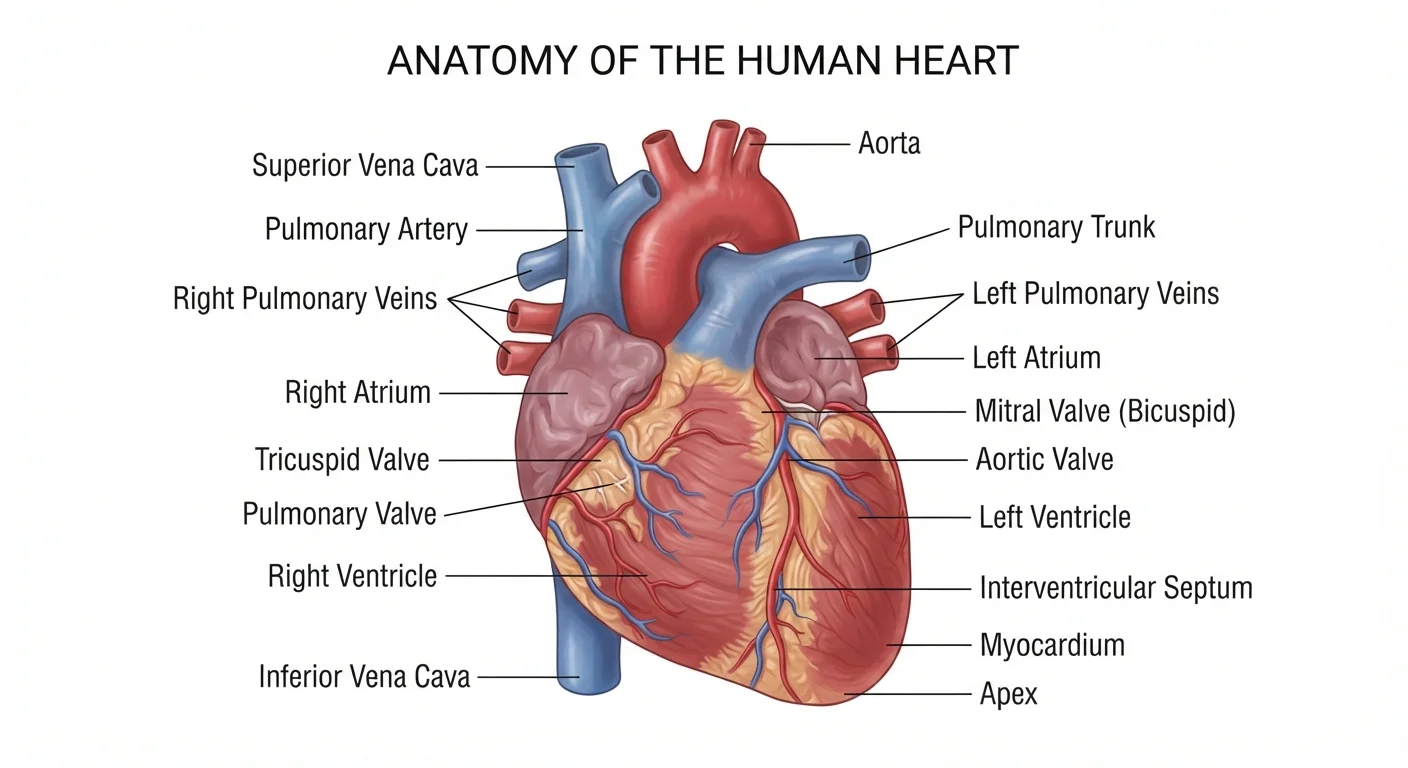
Photo: CoralScripts.com | Explore, Discover, Engage editorial
—— In This Article
Why Knowing These Terms Matters
Appointments with a cardiologist or primary care physician often move quickly, and the clinical vocabulary can leave patients feeling lost before they leave the exam room. Terms such as ejection fraction, stenosis, and troponin carry precise meaning - understanding them helps you ask better questions, follow treatment rationales, and retain what your provider tells you.
This reference compiles the cardiovascular terms that come up most frequently in clinical settings and patient-facing test results. It is designed for lookup use: scan the glossary below, or read through the sections to build a fuller picture of how these concepts connect.
This Reference Is Educational, Not Medical Advice
The definitions here are intended to help you understand and participate in clinical conversations - not to replace individualized guidance from a qualified healthcare provider. If you are managing or concerned about a heart condition, always consult a licensed physician or cardiologist for diagnosis, treatment decisions, and any medication questions.
For a complementary skill - learning how to describe your own symptoms clearly - see communicating effectively with healthcare providers for practical approaches to sharing information more accurately during appointments.
Core Cardiovascular Terms Defined
The terms below represent the vocabulary most likely to appear in a cardiologist's notes, a test result summary, or a conversation about cardiovascular risk. Use this section alongside the full glossary for context on how each concept fits into the broader picture of heart health.
| Leading cause of death (US) | Heart disease (CDC, 2023) |
| Normal ejection fraction range | 55%-70% (American Heart Association) |
| Hypertension threshold | ≥130/80 mmHg (ACC/AHA 2017 guidelines) |
| US adults with cardiovascular disease | ~48% (AHA Heart Disease & Stroke Statistics, 2024) |
| Primary diagnostic test for heart attack | Troponin blood test (Standard emergency clinical protocol) |
| Most common arrhythmia worldwide | Atrial fibrillation (AFib) (World Heart Federation) |
Glossaries like this one are useful across fields that rely on specialist language. If you have found value here, similar plain-language references exist for key terms in holistic health as well as areas such as personal credit and debt where jargon can be equally opaque.
This article is for general informational and educational purposes only and does not constitute medical advice. Always consult a qualified healthcare professional regarding any cardiac symptoms, diagnoses, or treatment decisions.

Health & Wellness Editorial Team
Health & Wellness Editorial Team is the collective byline for our editorial team and contributor network. Articles published under this byline or an editorial pen name are researched, written, and reviewed according to our editorial standards for clarity, consistency, and independence before publication.
View author profile